Key takeaways
Pokemon card size is standardized at 2.5 x 3.5 inches (63 x 88 mm), matching most trading card game dimensions worldwide. Understanding these exact specifications helps collectors choose proper sleeves, binders, and storage solutions while ensuring tournament-legal cards.
- Standard Pokemon card size measures 2.5 x 3.5 inches (63 x 88 mm or 6.3 x 8.8 cm) with approximately 0.3 mm thickness and 1.8 grams weight for regular cards
- Pokemon cards share identical dimensions with Magic: The Gathering and most Western TCGs, but differ from Yu-Gi-Oh cards which measure 2.3 x 3.3 inches
- Jumbo Pokemon cards are significantly larger at 8 x 11 inches and cannot be used in official play, serving purely as promotional collectibles
- Japanese and English Pokemon card size specifications are identical, ensuring global compatibility for sleeves, storage, and tournament play across all regions
- Standard card sleeves measure 66 x 91 mm to accommodate the 63 x 88 mm Pokemon card size with minimal extra space, while toploaders require 3 x 4 inch dimensions
- For digital design and printing, Pokemon cards convert to 750 x 1050 pixels at 300 DPI resolution with a 5:7 aspect ratio for accurate template creation
Knowing the precise pokemon card size prevents costly storage mistakes and protects valuable collections. Slight size discrepancies often indicate counterfeit cards, making accurate measurement essential for authentication. Whether organizing thousands of commons or preserving rare holographics, proper sizing ensures long-term preservation and maintains resale value throughout your collecting journey.
Standard Pokemon Card Size: Exact Dimensions in Inches, MM, and CM
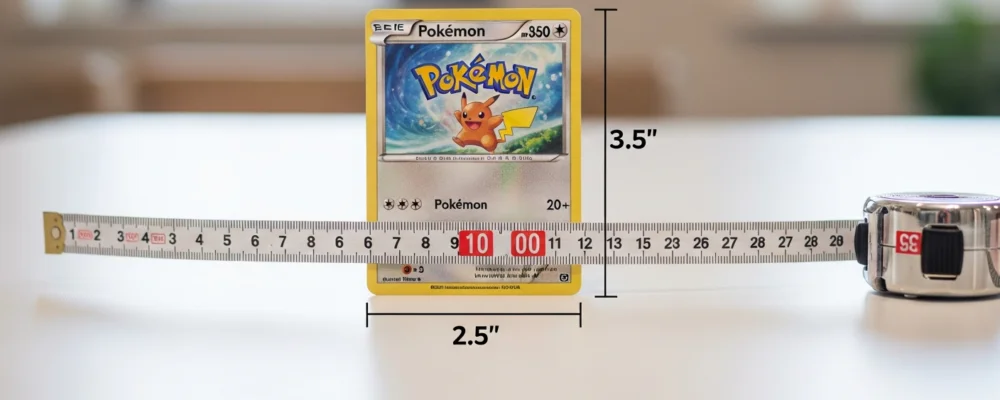
The pokemon card size follows a universal standard that’s remained consistent since the game’s 1996 launch. Regular cards measure precisely 2.5 x 3.5 inches across all sets and rarities. This standardization ensures compatibility with protective accessories worldwide and maintains tournament legality.
Pokemon card size in inches: 2.5 x 3.5 in
Every standard Pokemon card measures 2.5 inches wide by 3.5 inches tall. This dimension applies to commons, rares, holographics, and ultra-rares alike. The consistency allows collectors to use uniform storage solutions regardless of card value or rarity.
Official Pokemon Company specifications maintain these exact measurements for competitive play. Tournament organizers verify dimensions to ensure fair gameplay. Cards deviating from the pokemon card size standard face disqualification from sanctioned events.
Pokemon card size in mm and cm: 63 x 88 mm (6.3 x 8.8 cm)
The metric pokemon card size converts to 63 millimeters wide by 88 millimeters tall. In centimeters, cards measure 6.3 x 8.8 cm precisely. These measurements help international collectors select proper European or Asian-manufactured sleeves and binders.
Most protective sleeve manufacturers list dimensions in millimeters. Standard sleeves accommodate the 63 x 88 mm card with 2-3 mm clearance per edge. This spacing prevents card damage while ensuring snug protection during transport and storage.
Pokemon card thickness and weight specifications
Standard cards measure approximately 0.3 millimeters thick (roughly 12 mil or 300 microns). This thickness remains consistent across printing facilities globally. Weight averages 1.8 grams per card, though holographic treatments may add 0.1-0.2 grams.
Thickness variations often indicate counterfeit cards. Authentic cards feel uniform when stacked together. Collectors measuring fake versus real cards discover size discrepancies immediately. Professional grading services verify exact pokemon card size specifications before authentication.
Understanding precise dimensions protects your investment. Cards matching official specifications maintain market value better than irregular prints. Proper sizing ensures long-term preservation success.
Read also: Pokemon Card Size Explained: Exact Dimensions in Inches and CM
Read also: Dark Type Pokemon: 15 Fan Favorites Ranked for 2026
Read also: Fighting Type Pokemon: 15 Strongest Picks for 2026 Battles
Pokemon Card Size Compared to Other Trading Card Games
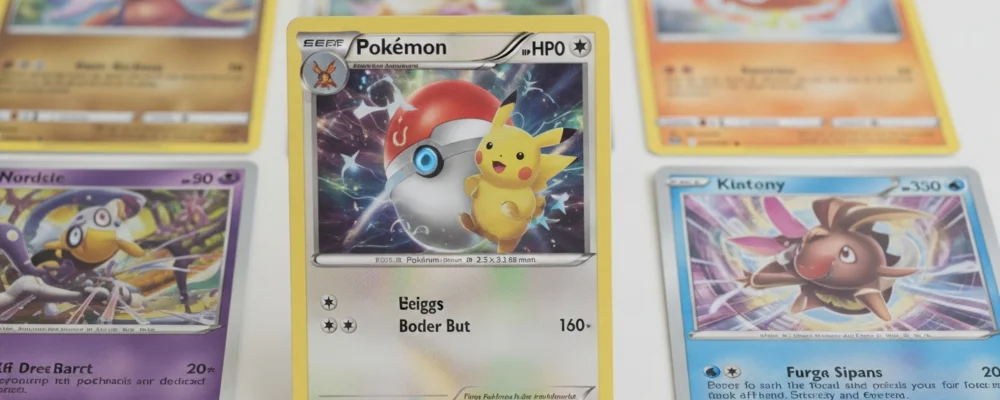
Pokemon card size follows industry-standard TCG dimensions, but subtle differences exist between popular trading card games. Collectors switching between formats often discover their protective supplies don’t fit all card types. Understanding these variations prevents storage mishaps and helps optimize your collection organization.
Pokemon vs MTG card dimensions
Magic: The Gathering cards measure 2.5 x 3.5 inches, matching the pokemon card size exactly. Both games share identical width and height specifications at 63 x 88 mm. This compatibility allows collectors to use the same sleeves, binders, and toploaders for both card types.
MTG cards feature slightly different thickness tolerances in foil treatments. Premium MTG foils sometimes curl more than Pokemon holofoils due to coating differences. Despite identical pokemon card size dimensions, card stock composition varies between manufacturers.
Pokemon vs Yu-Gi-Oh card size differences
Yu-Gi-Oh cards measure significantly smaller at 2.4 x 3.4 inches (59 x 86 mm). This 2-3 mm difference per edge makes standard Pokemon sleeves loose and ineffective for Yu-Gi-Oh protection. Collectors mixing both games require separate storage solutions entirely.
The smaller pokemon card size alternative affects binder compatibility too. Nine-pocket binder pages designed for Pokemon cards create gaps around Yu-Gi-Oh cards. This spacing increases movement damage during transport and display.
Authentication becomes crucial when size affects value. Learning how to distinguish fake from real Pokemon cards protects your investment across all TCG formats.
Standard TCG card size across gaming formats
Most Western trading card games adopt the 2.5 x 3.5 inch standard. Baseball cards, hockey cards, and basketball cards share this pokemon card size specification. This uniformity emerged from printing industry standards established decades ago.
Standard sizing enables mass production efficiency. Sleeve manufacturers produce universal products fitting multiple game types. Collectors benefit from wider accessory availability and competitive pricing across protective storage options.
Pokemon Card Size Variations: Jumbo, Oversized, and Special Formats
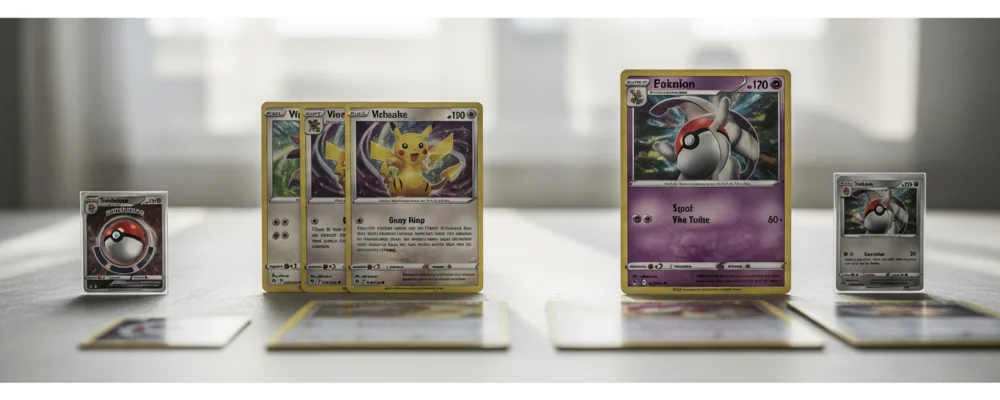
Pokemon card size extends beyond the standard 2.5 x 3.5 inches into specialized formats. Jumbo cards, mini promos, and regional variations serve distinct purposes for collectors and promotional campaigns. Understanding these alternative dimensions helps organize collections and identify legitimate special editions.
Jumbo Pokemon cards dimensions and uses
Jumbo Pokemon cards measure approximately 8 x 11 inches (203 x 279 mm). These oversized versions accompany collection boxes, premium tins, and tournament prize packs. Pokemon card size variations like jumbos serve display purposes rather than competitive play.
Collectors frame jumbo cards as centerpiece artwork. Standard protective sleeves cannot accommodate these dimensions. Specialized jumbo sleeves measuring 8.25 x 11.25 inches provide proper protection for display and storage.
Tournament organizers award jumbo cards as championship prizes. These cards feature identical artwork to standard versions but remain illegal for official play. Their value stems from rarity rather than gameplay utility.
Mini and promotional card sizes
Mini Pokemon cards measure roughly 1.5 x 2 inches (38 x 51 mm). These promotional items appear in cereal boxes, magazines, and special event giveaways. Retailers distribute mini cards during product launches and store promotions.
The smaller pokemon card size creates collectible novelties without gameplay function. Some mini cards feature authentic TCG artwork while others showcase simplified designs. Distinguishing authentic promotional cards from unauthorized reproductions protects collection integrity.
Japanese vs English Pokemon card size differences
Japanese and English Pokemon cards share identical pokemon card size dimensions at 2.5 x 3.5 inches. However, Japanese cards typically feel slightly thinner and measure 0.28-0.30 mm versus Western cards at 0.30-0.33 mm thickness. This subtle difference affects storage density in binders.
Card stock composition varies between regions. Japanese cards use higher-quality materials that resist warping better than some English printings. Both versions fit standard sleeves perfectly, maintaining complete compatibility for international collectors and players.
Pokemon Card Size for Sleeves, Binders, and Protection
Pokemon card size determines the protective accessories you need for proper storage and preservation. Standard sleeves measuring 66 x 91 mm (2.6 x 3.58 inches) fit perfectly over regulation cards. These penny sleeves provide basic protection against scratches and minor handling damage.
Best sleeve sizes for standard Pokemon cards
Premium card sleeves designed for pokemon card size specifications offer superior protection. Dragon Shield and Ultra Pro manufacture sleeves at 66 x 91 mm dimensions with reinforced seams. Double-sleeving combines inner perfect-fit sleeves (64 x 89 mm) with outer standard sleeves for maximum safety.
Professional collectors use KMC Perfect Size sleeves measuring exactly 64 x 89 mm. These tight-fitting inner sleeves prevent dust infiltration and moisture damage. Authentic cards maintain value better when properly sleeved from initial purchase.
Binder pocket dimensions and compatibility
Standard 9-pocket binder pages feature openings measuring 67 x 92 mm. This pokemon card size accommodation allows sleeved cards to slide in smoothly without corner bending. Side-loading pockets prevent cards from falling out during transport and storage.
Four-pocket and one-pocket binder pages suit high-value cards requiring extra space. Ring spacing affects card safety, with D-ring binders providing flatter storage than O-ring alternatives. Valuable cards deserve archival-quality binder pages free from PVC plasticizers that cause long-term damage.
Toploader and rigid holder specifications
Standard toploaders measure 3 x 4 inches (76 x 102 mm) internally, perfectly housing sleeved cards. These rigid holders protect against bending, creasing, and impact damage during shipping. Ultra Pro 35pt toploaders remain the industry standard for pokemon card size protection needs.
Magnetic holders and snap-tight cases offer premium alternatives. Card Saver semi-rigid holders (measuring 2.625 x 3.75 inches) suit grading submissions perfectly. Graded slabs from PSA and CGC measure approximately 4 x 5.75 inches, requiring specialized storage solutions.
Pokemon Card Size in Pixels and Digital Dimensions for Design
Digital designers need accurate pokemon card size specifications for creating custom cards and templates. Standard resolution requirements ensure print-ready files match physical card dimensions exactly. Proper pixel dimensions prevent scaling issues and maintain professional quality.
Pokemon card size in pixels at 300 DPI resolution
At 300 DPI (dots per inch), the pokemon card size converts to 750 x 1050 pixels. This resolution ensures crisp printing without pixelation or blurriness. Professional print shops require 300 DPI minimum for commercial-quality trading card production.
For 600 DPI ultra-high resolution, dimensions increase to 1500 x 2100 pixels. Lower resolutions like 72 DPI (180 x 252 pixels) suit web display only. Digital artists should always work at 300 DPI or higher, then downscale for online sharing.
Pokemon card size ratio and aspect ratio for templates
The aspect ratio for standard cards measures 5:7 (or approximately 0.714:1). This ratio remains constant regardless of resolution or physical size. Template creators must maintain this proportion to avoid stretched or compressed designs.
Graphic design software like Photoshop and Illustrator accept dimensions in multiple units. Set canvas to 2.5 x 3.5 inches at 300 DPI for automatic pixel calculation. The 5:7 ratio applies universally to all pokemon card size variations except jumbo formats.
Creating custom Pokemon card templates with correct dimensions
Professional templates include bleed areas extending 0.125 inches beyond card edges. This safety margin prevents white borders after cutting. Final template size should measure 2.75 x 3.75 inches (825 x 1125 pixels at 300 DPI) including bleed.
Key design elements require precise placement within safe zones. Text and critical graphics should stay 0.125 inches from edges to avoid trimming. Authentic card templates help designers replicate official layouts accurately, maintaining the standard pokemon card size throughout the creation process.
Export files as high-resolution PNG or TIFF formats for printing. PDF format with embedded fonts ensures consistent reproduction across different printers.
How to Measure Pokemon Card Size Accurately at Home
Tools needed for precise card measurement
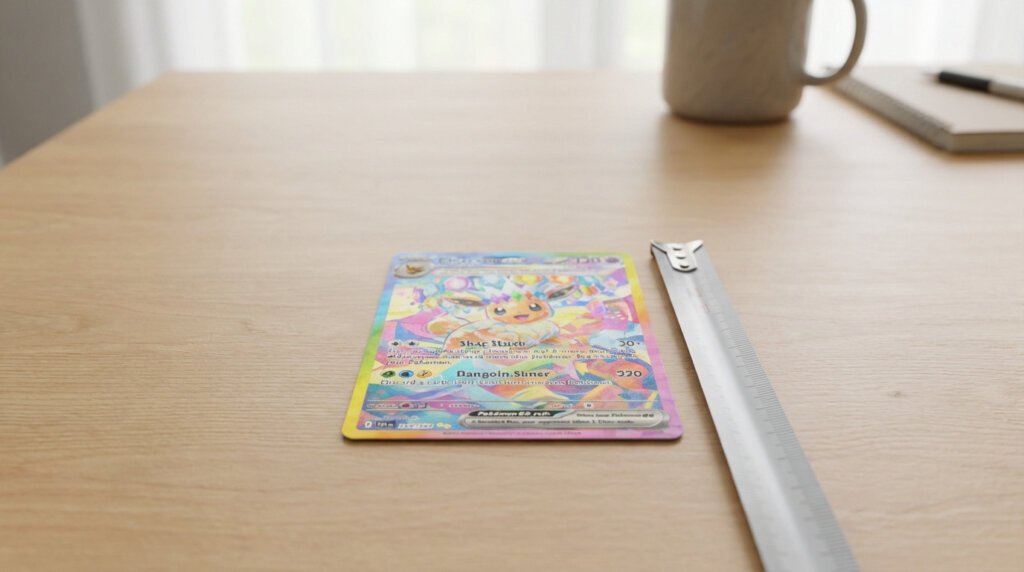
A digital caliper provides the most accurate pokemon card size measurements at home. These instruments measure down to 0.01 mm precision, far exceeding standard rulers. Position the caliper jaws along card edges without applying pressure to avoid damage.
Essential measurement tools include:
- Digital calipers – Best for thickness and exact dimensions
- Precision ruler – Metal rulers with mm markings work well
- Jeweler’s scale – Measures weight to 0.01 gram accuracy
- Magnifying glass – Reveals edge irregularities and cutting quality
Place cards on a flat, non-slip surface during measurement. Record three readings per dimension (length, width, thickness) and calculate the average. Standard cards should consistently measure 2.5 x 3.5 inches with minimal variation. Deviations beyond 0.5 mm suggest manufacturing defects or authenticity issues.
Identifying counterfeit cards through size discrepancies
Counterfeit cards frequently fail pokemon card size specifications by 1-2 mm in any dimension. Fake cards often measure 64 x 89 mm instead of the standard 63 x 88 mm. Thickness variations prove particularly revealing, with counterfeits typically thinner at 0.25-0.28 mm versus authentic 0.30-0.33 mm.
Compare suspicious cards directly against verified authentic cards. Overlay them against backlighting to spot size differences. Edges on fake cards appear rougher or unevenly cut under magnification. Weight discrepancies of more than 0.1 grams indicate non-standard cardstock.
Professional authentication services examine precise dimensions alongside other factors. Learning how to tell a fake pokemon card protects collectors from purchasing counterfeits. Accurate home measurement catches obvious fakes before seeking professional verification. Always verify the pokemon card size matches official specifications when assessing authenticity.
Pokemon Card Size Standards by Region: US, UK, and Japan
Are Pokemon card sizes different in the UK?
Pokemon card size remains identical across UK, US, and European markets at 2.5 x 3.5 inches (63 x 88 mm). The Pokemon Company International maintains uniform manufacturing standards for all Western releases. UK collectors use the same sleeves, binders, and storage solutions as American players without compatibility concerns.
Regional printing differences exist in cardstock texture and finish quality. UK and European cards often feature slightly glossier coating compared to American prints. These variations don’t affect pokemon card size specifications or tournament legality. Cards printed in different Western facilities remain fully interchangeable.
Key similarities across UK and US releases:
- Identical dimensions – 2.5 x 3.5 in standard across all regions
- Same thickness – 0.30-0.33 mm cardstock specification
- Uniform weight – 1.7-1.9 grams per card
- Compatible with standard 66 x 91 mm protective sleeves
Japanese Pokemon card dimensions and compatibility
Japanese Pokemon cards measure identically to English versions at 63 x 88 mm (2.5 x 3.5 inches). Despite different print facilities and cardstock suppliers, pokemon card size standards remain consistent globally. Japanese cards fit standard sleeves and toploaders designed for Western releases.
The primary difference involves cardstock quality rather than dimensions. Japanese cards typically use thinner, higher-quality stock at 0.28-0.30 mm versus 0.30-0.33 mm for English prints. This creates slight weight variations of 1.5-1.7 grams for Japanese cards compared to 1.7-1.9 grams for English versions.
Collectors mixing Japanese and English cards in binders notice minimal size discrepancies. Both versions maintain the pokemon card size specifications required for official tournament play. When authenticating international cards, compare against verified genuine examples rather than relying solely on regional differences. Legitimate size variations never exceed 0.3 mm across any authentic Pokemon card region.
Why Pokemon Card Size Matters for Collectors and Players
Pokemon card size plays a crucial role in both competitive gameplay and long-term collecting strategies. Understanding why exact dimensions matter helps collectors protect their investments and ensures players maintain tournament eligibility across all sanctioned events.
Tournament legality and official size requirements
Official Pokemon tournaments enforce strict pokemon card size regulations of 2.5 x 3.5 inches. Cards exceeding these specifications by more than 0.5 mm face disqualification from competitive play. Tournament organizers measure suspicious cards using calibrated tools to ensure fairness.
Players using counterfeit or altered cards risk permanent bans from sanctioned events. Even minor trimming to improve card centering creates size discrepancies detectable by judges. Maintain original pokemon card size specifications to preserve tournament legality and competitive value.
Storage optimization and collection organization
Consistent card dimensions enable efficient storage solutions for collectors. Standard 66 x 91 mm sleeves and binder pages accommodate thousands of cards in minimal space. Non-standard sizes require specialized storage, increasing collection maintenance costs significantly.
Oversized promotional cards measuring 5 x 7 inches demand separate storage systems. Collectors organizing mixed-size collections face challenges finding compatible protection. Understanding pokemon card size variations before purchasing helps avoid storage incompatibility issues.
Resale value impact of non-standard card sizes
Cards maintaining exact dimensions command premium prices in secondary markets. Trimmed or damaged cards showing size alterations lose 50-90% of their value compared to unaltered examples. Professional grading services automatically reject cards with dimension discrepancies.
Jumbo and promotional cards typically hold lower resale value than standard-sized equivalents. Their larger format limits display options and excludes them from competitive play. Serious collectors prioritize standard pokemon card size cards for investment portfolios due to broader market demand and liquidity.