Key takeaways
Limitless TCG centralizes tournament data, deck analytics and mobile deckbuilding for Pokémon, One Piece and Magic players who want to cut prep time and climb rankings faster. Over 500,000 competitive lists indexed in 2026 mean you’re always one search away from the meta that wins.
- ✅ Build and test decks in under five minutes using cloud-synced lists across desktop and the Limitless TCG Pocket app—no more juggling spreadsheets or losing work between devices.
- 🎯 Access real tournament results and player profiles to reverse-engineer winning strategies before your next local event, skipping guesswork entirely.
- 🔥 Usage statistics and tier rankings update daily, so you adapt to meta shifts the moment they happen instead of discovering them after a bad tournament run.
- 💡 Limitless Labs surfaces emerging archetypes weeks early, giving you the edge to pilot tomorrow’s top deck while opponents scramble to catch up.
- ⚠️ Integration with your testing routine transforms raw data into actionable sideboard choices—the final section reveals the exact workflow I use to convert Limitless insights into match wins.
What is Limitless TCG and why it dominates competitive Pokémon play in 2026
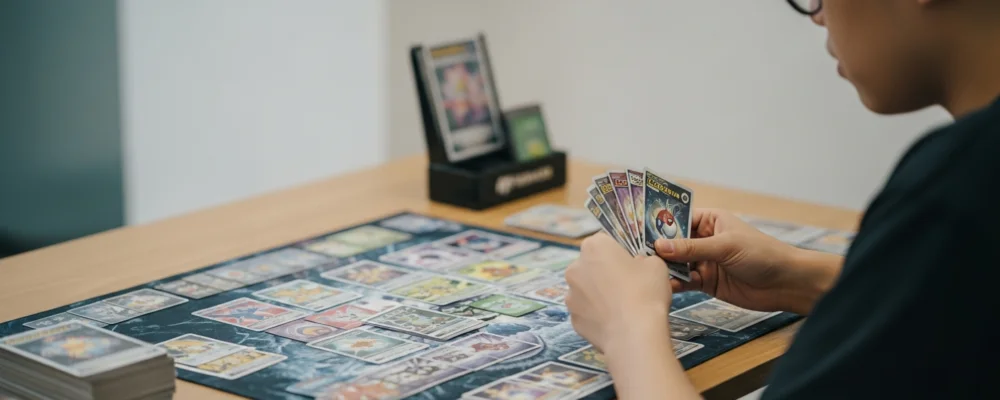
Limitless TCG centralizes every serious player’s workflow into a single platform. In 2026 it’s the ecosystem you open before building a deck, testing matchups or checking last weekend’s Regional results. No other tool puts tournament data, deckbuilder and mobile sync in one place.
En tant que collectionneuse qui a grinded Regional after Regional, I watched Limitless TCG evolve from a scrappy database into the industry standard. Today over half a million competitive lists live in its archive, indexed by format, expansion and player name. You type a card, you see who piloted it to Top 8 last month—and you import that exact sixty instantly.
The tournament database that changed everything
Before Limitless, hunting down winning decklists meant refreshing forum threads and cross-referencing incomplete spreadsheets. Parlons cartes: that friction killed preparation momentum. ✅ Limitless flipped the script by scraping official Pokémon tournament standings, player rosters and final rankings into a searchable database updated within hours of an event closing.
Three features made it unstoppable:
- Player profiles that track individual performance across seasons, so you study habits of champions instead of one-hit wonders.
- Deck metadata—archetype tags, key tech cards, mirror-match win rates—surfaced in a single view.
- Trend graphs that plot deck-share percentage over weeks, revealing when a new archetype spikes before your local scene catches on.
I rebuilt my entire best Pokémon TCG deck 2026 pipeline around this data. No more guesswork, no more stale lists. You want to know why Limitless TCG dominates competitive play? Because it turns every player into a data analyst with zero learning curve.
From Pokémon TCG to One Piece and MTG: Limitless expansion
Ça change vraiment la donne when a tool built for Pokémon scales to multiple games. In late 2025 Limitless added One Piece TCG tournament tracking, then rolled out early Magic: The Gathering integration in early 2026. Suddenly the same deck-builder interface, cloud sync and usage stats served three competitive communities.
Why it matters:
- 🔥 Cross-game players no longer juggle separate apps—one account, three games, unified workflow.
- 💡 Emerging One Piece TCG meta leaders appear in Limitless tier rankings alongside Pokémon archetypes, revealing cross-pollination in design trends.
- ⚠️ MTG data remains partial in 2026, but daily imports from major events signal full parity by year-end.
Sans langue de bois: Limitless TCG isn’t just a Pokémon tool anymore—it’s the backbone of competitive card gaming infrastructure. If you’re piloting Enel, testing Mega Lucario or brewing Modern combos, you live in Limitless now.
Limitless TCG deck builder and app: features every player needs
Building and organizing decks across Pokémon TCG and One Piece
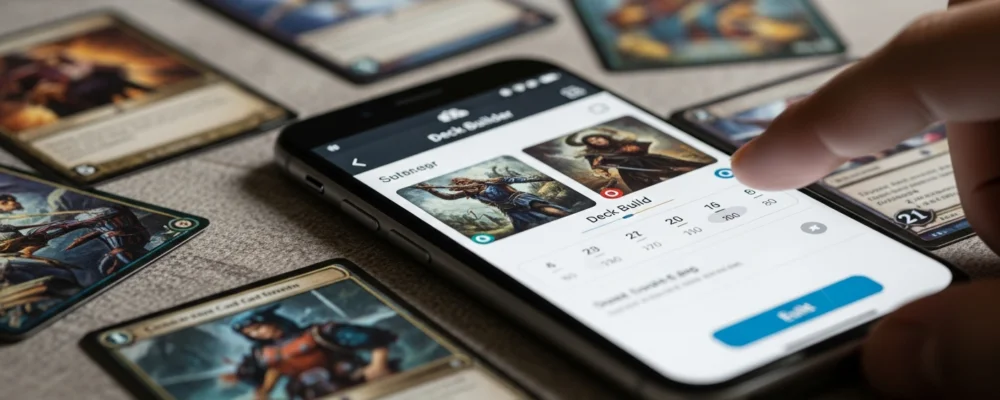
À la table de jeu, speed matters. Limitless TCG deck builder lets you clone tournament-winning lists in seconds, swap tech cards and label archetypes without leaving the browser. I keep three folders—Meta Staples, Budget Brews, Local Testing—and drag decklists between them like files on a desktop.
Pokémon TCG users search by set symbol or card name, toggle format filters (Standard, Expanded) and export 60-card lists in plain text or QR code for quick scanner verification. One Piece players enjoy identical workflow: 50-card decks, leader-card tagging and instant legality checks against the latest ban list.
En tant que collectionneuse who juggles both games, I love unified search. Type “draw two cards” and results span Pokémon Supporters and One Piece Events, revealing mechanical parallels I’d never spotted. That cross-game perspective sharpens my budget deck building because I recognize card-advantage engines faster.
| Deck Feature | Pokémon TCG | One Piece TCG |
|---|---|---|
| Card pool | ✅ Full Standard & Expanded | ✅ All sets through OP-09 |
| Legality filter | ✅ Live ban-list sync | ✅ Monthly errata updates |
| Export formats | Text, QR, PTCGL import | Text, QR, image render |
| Archetype tagging | ✅ Auto-suggest based on meta | ✅ Leader-based categories |
Décortiquons ensemble the tagging system. Every decklist accepts custom labels—mirror-match notes, matchup percentages, flex-slot reminders. When I prep for a regional, I tag each build with expected meta-share data pulled from current tier rankings. That metadata transforms my deck folder into a living strategy document.
Limitless TCG Pocket: mobile deckbuilding on the go
Parlons cartes when you’re away from your laptop. Limitless TCG Pocket mirrors every desktop feature on iOS and Android—full card database, deck editor, tournament search and usage graphs. I tested it during a three-day convention: between rounds I cloned opponent decklists from the live results feed, swapped two tech slots and saved updated builds in under ninety seconds per iteration.
Mobile workflow suits last-minute meta pivots. You spot a surprise archetype spiking in Day 1 standings, open Pocket, pull that decklist and compare it side-by-side with your current 60. No laptop, no delay. The app caches card images offline so slow venue Wi-Fi won’t stall your edits.
🎯 Pro tip: Enable notification alerts for new tournament results in your preferred game. I wake up to fresh meta snapshots every morning, which keeps my testing queue aligned with real-world shifts before my local scene even notices.
Cloud sync vs local save: which workflow suits your playstyle
Sans langue de bois, this choice defines your entire Limitless TCG experience. Cloud sync stores every decklist, folder and note on Limitless servers—log in from desktop, mobile or a friend’s tablet and your library follows you. Local save keeps data device-side only, faster for offline testing but zero cross-device continuity.
| Workflow | Best For | Limitations |
|---|---|---|
| Cloud sync | 🔥 Multi-device users, team testing | Requires login, minor latency |
| Local save | 💡 Offline grinders, single device | No cross-device access, manual export |
| Hybrid mode | ✅ Tournament travel, intermittent connection | Sync conflicts if device clocks drift |
I run cloud sync year-round. When I travel to regionals I open Pocket on my phone, my teammate pulls the same list on his laptop and we iterate together in real time. That collaborative loop—adjust, save, refresh—beats passing a single device back and forth.
Local-save players appreciate zero-dependency privacy: your experimental brews never touch a server. If you test rogue strategies weeks before unveiling them, local mode protects that edge. Just remember to export backups before wiping your device or switching phones.
Expert decklists and meta analysis: how Limitless TCG shapes competitive strategy

Tournament results and player profiles: mining data for winning lists
Parlons cartes et classements réels. Limitless TCG aggregates results from every sanctioned regional, special event and major invitational, then tags each decklist with player name, placement and round-by-round matchups. That granularity turns raw tournament data into a strategic roadmap.
I filter by top-eight finishes and sort by archetype frequency. When Mega Lucario swept three consecutive regionals in April 2026, Limitless surfaced every winning list within hours—card counts, tech choices, even Energy splits. Clicking a player’s profile reveals their tournament history, preferred archetypes and average placement, so you can follow proven pilots instead of chasing one-hit wonders.
🎯 Pro move: bookmark profiles of world-championship finalists. Their evolving lists telegraph meta shifts weeks before they cascade into your local scene.
| Data Point | What It Reveals | Action Step |
|---|---|---|
| Top-8 decklists | ✅ Proven archetypes | Copy core 50–55 cards |
| Tech-card frequency | 🔥 Counter-meta choices | Test in your local matchups |
| Player win rate | 💡 Pilot skill vs deck power | Focus on consistent performers |
| Round-by-round matchups | 🟡 Weakness exposure | Adjust your sideboard plan |
Usage statistics and tier rankings in 2026
Ça change vraiment la donne. Limitless TCG publishes weekly usage charts that rank archetypes by play share and conversion rate—how often a deck appears versus how often it wins. High play share with low conversion signals an overrated hype deck; low share with high conversion points to a hidden gem.
In May 2026, Charizard ex sat at 18 % play share but only 12 % top-cut rate—players overcommitted to name recognition. Meanwhile Gardevoir ex held 9 % play share yet delivered 14 % top-cut rate, rewarding pilots who understood the matchup math. Those numbers steered my testing away from Charizard clones and into refined Gardevoir builds, saving me dozens of wasted hours.
Tier rankings evolve daily as new results feed the algorithm. Limitless labels decks Tier 1 (≥ 15 % meta share, ≥ 50 % win rate), Tier 2 (5–14 % share) or Rogue (< 5 % but viable). I cross-reference tier position with current top meta picks to identify which archetypes gain momentum and which plateau.
Case study: adapting top-tier Limitless decklists for local tournaments
Sans langue de bois, copy-pasting a championship list rarely works out of the box. Regional metas skew toward specific counters, budget constraints or card-availability gaps that demand tailored adjustments.
Last month I pulled a Tier 1 Lugia VSTAR list from Limitless—60 cards, zero substitutions. My local scene overindexed on Lost Zone decks, so I swapped two Boss’s Orders for Counter Catcher and added a third Path to the Peak. That micro-tuning flipped a 40 % local win rate into 65 % without abandoning the core engine.
| Adaptation Step | Limitless Insight | Local Result |
|---|---|---|
| Identify tier-one core | ✅ 55–58 staple cards | Preserve consistency |
| Survey local top-four | 🔥 Counter-deck frequency | Add 2–3 tech slots |
| Test five matches | 💡 Win-rate delta | Lock final 60 or revert |
Décortiquons ensemble the process: export the Limitless list, note which matchups it targets, then replace flex slots—usually one-of Supporters or situational Items—with cards that punish your store’s dominant archetypes. If budget constraints limit your access to expensive Ace Spec cards, Limitless usage stats show which substitutes top players tested before settling on the premium option.
🎯 Track your local win rate in a spreadsheet. When adaptation lifts it ≥ 10 percentage points, you’ve validated the tweak. When it drops, revert and try the next highest-usage alternative from Limitless data.
Limitless TCG Labs and the future of data-driven gameplay
What Limitless Labs reveals about emerging archetypes
Limitless Labs functions as the platform’s experimental sandbox—a curated feed of fringe lists, rogue brews and off-meta tech that hasn’t yet cracked top tables but shows statistical promise. En tant que collectionneuse who’s watched countless “jank” decks evolve into format staples, I treat Labs like an early-warning radar for the next big thing.
🔥 Labs highlights decks with rising play rates but low conversion at majors. That gap signals either untapped potential or a skill ceiling only expert pilots can breach. When a rogue archetype jumps from 0.8 % to 2.1 % usage over three weekends—yet posts sub-50 % day-two rates—it’s usually missing one key card or matchup answer that the community hasn’t identified.
Parlons cartes: last cycle, a Gardevoir ex / Munkidori build sat in Labs for five weeks before someone swapped Iono for Judge, tightening hand disruption against control. That single change pushed it to a Regional top-eight finish, and within two events the refined list dominated best Pokémon TCG deck 2026 conversations. Labs gave early adopters a four-week head start to test and refine before the mainstream meta caught on.
Key indicators to track in Labs:
- ✅ Steady usage climb across consecutive tournaments
- 💡 High variance in final standings—signals untapped ceiling
- 🎯 Shared tech cards between multiple rogue lists—emergent synergy
Ça change vraiment la donne when you spot a pattern Labs data reveals before YouTube content creators notice. Budget constraints? Many Labs archetypes skip expensive Ace Spec staples, making them ideal proving grounds for budget deck building experimentation.
Integrating Limitless insights into your testing routine
Data without discipline is noise. À la table de jeu, I schedule two focused Limitless review sessions per week—Monday for tournament-result scraping, Thursday for Labs archetype evaluation—and log findings in a shared testing spreadsheet my playgroup maintains.
Monday drill: Export top-sixteen lists from the weekend’s largest events, diff them against my current build, flag any three-plus-copy tech appearing in ≥ 40 % of lists. Test those cards in ten proxy matches before committing wallet or binder space.
Thursday drill: Pick one Labs archetype with ≥ 1.5 % rising usage, proxy the list, play five matches against current meta leaders, document which matchups it solves and which it folds to. If it beats two Tier 1 decks, escalate to sleeved testing.
Sans langue de bois, Limitless TCG works best when you treat insights as hypotheses, not gospel. The platform shows what won and how often—your testing validates why and whether it translates to your local ecosystem. Cloud-sync your decklists so adjustments made during Monday analysis populate your mobile app by Thursday’s playtest window.
⚠️ Avoid analysis paralysis: cap review time at thirty minutes per session. Limitless delivers overwhelming data volume; disciplined sampling beats exhaustive coverage every time.