Key takeaways
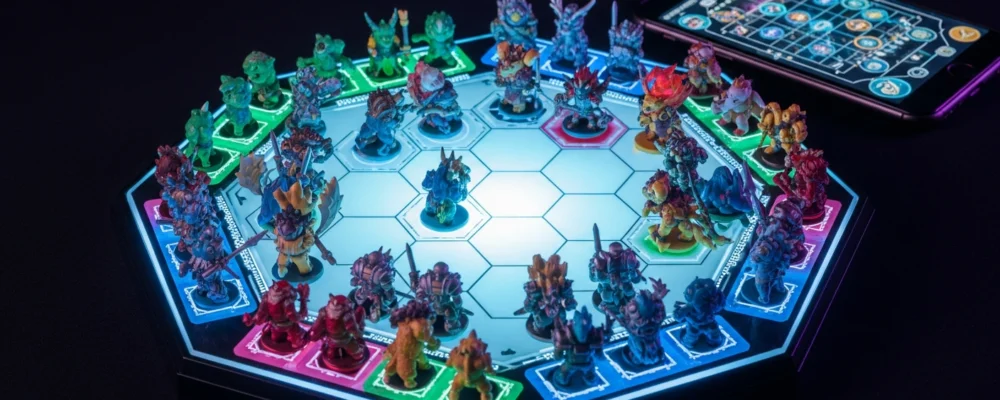
Pokemon Auto Chess rewards pattern recognition more than luck, and once you know which synergies actually carry games, your climb speed changes fast. Here’s the condensed version before the deep dive. 🎯
- 🎯 Synergy stacking beats random strong units: a coherent 3-type board consistently outperforms scattered “power picks” late game.
- 🎯 Positioning wins close fights: placing carries away from dive threats often decides rounds that look even on paper.
- 🎯 Budget comps exist for a reason: cheap early builds let you save gold and pivot once the meta reveals itself.
- 🎯 Evolutions depend on pool tracking: knowing how many copies are left in the shared pool prevents wasted gold on dead-end units.
- 🎯 Not all versions play the same: the fan-made browser build and the official Unite mode differ enough to change strategy.
- 🎯 The real edge is in item timing, and that’s exactly where most climbers lose ranked points without realizing it.
What is Pokemon Auto Chess and how does it work?
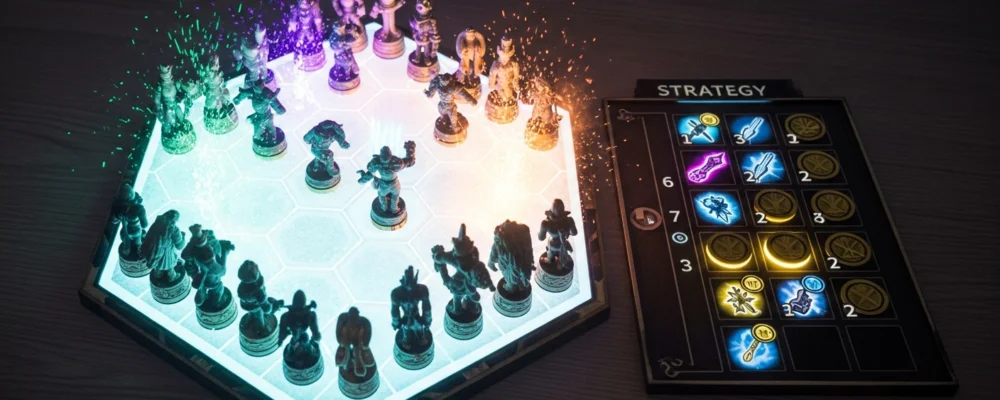
Parlons cartes, mais version plateau et pièces automatisées. Pokemon Auto Chess is a strategy game where you draft Pokemon, place them on a board, and watch them fight automatically each round. No manual inputs during combat: your prep phase decisions are what actually win or lose the fight. It’s built on the same DNA as autobattlers, but reskinned entirely around Pokemon typing, evolutions, and synergy bonuses.
The core loop is simple to describe, harder to master. You buy units from a shared shop, place them on a hex board, and let the AI resolve combat based on stats, positioning, and synergy bonuses. Games typically last around 30 to 40 minutes, and every round matters more than it looks.
Auto battler basics: rounds, gold, and positioning
Each round gives you gold, and gold is your only real resource. You spend it on:
- 📌 Rerolling the shop to find specific units
- 📌 Buying copies to trigger evolutions
- 📌 Leveling up your board to unlock more unit slots
- 📌 Saving for late-game interest, which compounds fast
Positioning is where most new players lose winnable fights. Placing a fragile carry next to a dive threat is a classic mistake that costs entire streaks. Back-line protection and front-line tanking aren’t optional extras, they’re the actual skill layer of the game.
Is Pokemon Auto Chess the same as TFT?
Not quite, even if the family resemblance is obvious. Both share the autobattler skeleton: shared pool, shop rerolls, synergy traits, positioning. But Pokemon Auto Chess leans harder into franchise-specific mechanics that TFT doesn’t have.
Patch 6.5, nicknamed “Garden Party,” added a digging mechanic where ground-type Pokemon burrow between stages to gain stats tied to depth, up to +5 defense and +3 attack at maximum depth, according to recent patch coverage. TFT has never had anything like it.
There’s also a platform split worth knowing early. The fan-made community project runs as a free browser game with its own patch cadence, while the official mode is folded into Pokemon Unite and, according to a widely shared community discussion on Reddit, currently only available in the Chinese version of Unite. Sans langue de bois: if you’re outside that region, the fan-made version is your entry point in 2026. 🔥
🔥 Best Pokemon Auto Chess comps to climb the ladder
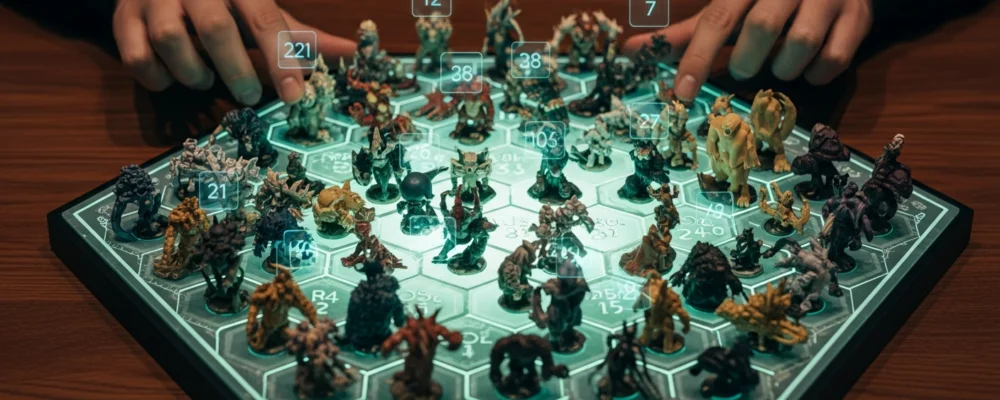
Let’s decode the board state. In 2026, the meta rewards commitment over flexibility. Half-built comps that chase three different synergies rarely survive stage 20. The strongest boards right now lean into one dominant trait, backed by a secondary that patches your weaknesses.
Top-tier synergy comps for the current meta
📌 Ground Diggers Control is the standout since Patch 6.5 added the burrow mechanic. Ground-types stack up to +5 defense and +3 attack at max digging depth, according to recent patch breakdowns covering the “Garden Party” update. That scaling makes a slow-start comp genuinely oppressive by late stages.
Charge stacking is the other pillar worth building around. Since Patch 6.0, the charge ability adds 100% bonus special damage per attack until the fight ends, and it stacks. A backline built around a charge carry snowballs damage in ways flat stat sticks can’t match.
| Comp name | Core synergy | Difficulty | Best trait to pair |
|---|---|---|---|
| Ground Diggers Control | Ground / Bulk | Medium | Rock frontline |
| Charge Stack Carry | Charge / Psychic | High | Ranged support |
| Dragon Late-Game Scaling | Dragon | Medium | Fairy disruption |
| Poison Attrition | Poison / Grass | Low-Medium | Dark burst |
Dragon Late-Game Scaling remains a safe pick for players who want a forgiving curve, since Dragon units generally hit their power spike naturally through leveling rather than requiring perfect item timing. Poison Attrition, meanwhile, punishes players who don’t respect damage-over-time ticks, a mistake even experienced ladder climbers still make when they board-wipe too early.
Budget comps for early ranked climbs
And ignoring them is a common early mistake. New players often overreach for a five-cost carry instead of stabilizing with cheap, replaceable units that hold the board while gold compounds through interest.
- 📌 Rock Wall Stall: cheap tanky front line, buys time to hit level 8
- 📌 Early Bug Swarm: fast three-star copies from low-cost units, strong tempo before stage 10
- 📌 Fighting Frontline: pairs well with concepts covered in this breakdown of the strongest Fighting-type picks, since board synergy and card synergy often reward similar type knowledge
- 📌 Poison Filler: cheap DOT pressure that buys rerolling time without committing gold too early
Anti-cheat measures were recently added alongside three new roster additions, according to Inven Global’s coverage of the latest patch, which should make budget climbing more consistent by cutting down on ladder manipulation. That matters more than people think: a cleaner ladder means your budget comp’s win rate reflects actual skill, not queue luck. 🔥
How to evolve Pokemon and manage items in Auto Chess
Evolutions win games before combat even starts. And that phrase deserves unpacking rather than a quick nod.
Evolution requirements and pool tracking
Most Pokemon evolve at fixed copy thresholds: three copies to reach stage two, three stage-twos to hit final form. That’s nine base units per completed line. In practice, the bottleneck isn’t gold, it’s pool depth. Every copy another player holds is one you can’t draw.
Tracking the pool means watching what’s already out on other boards, not just your own bench. A common mistake at low levels: greeding a five-cost carry while three opponents already hoard the same unit. Check bench sizes across the lobby before committing gold to a reroll strategy.
Useful habits for pool awareness:
- 📌 Count visible copies on opposing boards during scouting phases
- 📌 Prioritize contested low-cost units early, since they vanish from the pool fastest
- 📌 Delay five-cost commitments until stage 6-7, when the pool has thinned naturally
- 📌 Track item components separately from units, since crafting competes for the same drops
Digging depth, charge stacking, and other patch mechanics
Recent patches added layers that change how you time evolutions and items. Ground-type Pokemon now dig holes between stages, gaining stats tied to depth, up to +5 defense and +3 attack at max depth, based on the Garden Party update covered in this patch breakdown. That’s a strong argument for holding ground units on the bench a stage longer instead of selling them for tempo.
Charge mechanics matter just as much. A charge ability introduced in an earlier patch adds 100% bonus special damage per attack for the rest of the fight, and it stacks, according to patch notes analysis. Units with charge reward patience over rushed three-star pushes, since the damage snowballs mid-fight rather than front-loading at evolution.
Item timing also shifted: crafted rewards at Stage 19 now grant two components instead of a finished item, per recent patch documentation. Plan your build paths one stage earlier than you used to. 🔥
Where to play Pokemon Auto Chess: platforms and community picks
There’s also a version split worth knowing, because it changes where you should actually be climbing right now. 🎯 Not every port of the game gives you the same experience, and picking the wrong one wastes time you could spend learning the meta.
Fan-made browser version vs official Unite mode
The community-built version, hosted at Pokemon Auto Chess, runs entirely in-browser and has been the main testing ground for this genre for years. It’s open-source, actively patched, and the codebase lives publicly on GitHub, which means bugs get reported and fixed fast by a real community rather than a corporate patch cycle.
The official route is different. Pokemon Auto Chess as a mode is currently folded into Pokemon Unite, but it’s only live in the Chinese release of the game right now, according to discussion threads tracked in the r/PokemonUnite community. Players outside that region are stuck waiting or relying on the fan build to scratch the itch.
| Platform | Access | Best for |
|---|---|---|
| Fan-made browser version | ✅ Free, global | Practicing comps and testing patches early |
| Official Unite mode | 🟡 China client only | Ranked ladder tied to the main Unite ecosystem |
| Mobile emulators | ❌ Unofficial, unstable | Not recommended for ranked climbs |
As a collector who also grinds ladders, my honest read: start on the browser version. It’s the fastest way to learn digging depth timing and charge stacking without waiting on a regional rollout.
Tools worth using: calculators, tier lists, and Discord
Good tools save you rerolls and misplays. Pokemon Auto Chess Team Comps, Tier List & More tracks current comp rankings, which helps confirm whether a synergy is actually strong or just popular that week.
The official leaderboard is worth checking too, since it shows how top players build their boards at high ranks.
- 📌 Tier list sites for weekly comp rankings
- 📌 Pool trackers to confirm unit availability before committing gold
- 📌 Discord servers for patch discussion and matchup advice
- 📌 GitHub changelogs for exact patch wording, straight from developers
Discord communities move faster than any written guide, since players post patch reactions within hours. If you’re also managing a physical collection alongside your ladder grind, it’s worth double-checking card authenticity using a guide like how to tell a fake Pokemon card before trading with strangers you meet through these servers.
Frequently Asked Questions
Is Dota Auto Chess still alive?
Dota Auto Chess is still running, though it no longer dominates the genre it created. The autobattler wave it started branched into spinoffs like Pokemon Auto Chess, which now has its own patch cycle, community, and franchise-specific mechanics such as the digging and charge systems.
Pokemon Auto Chess exists as a fan-made browser project separate from Dota’s ecosystem, so its activity and updates run independently rather than depending on the original game’s health. 🔥