Key takeaways
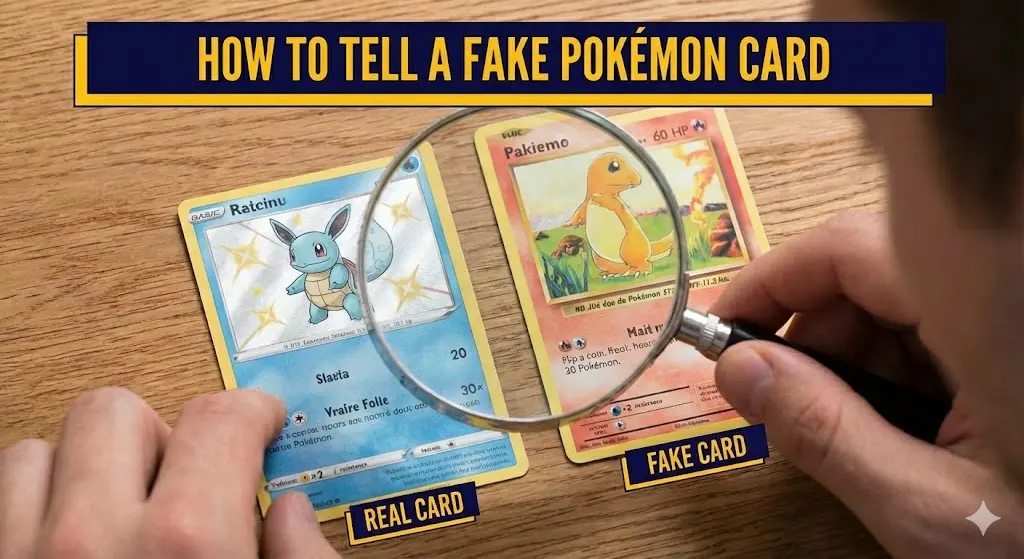
Fake Pokémon cards are flooding the market in 2026, and one bad purchase can cost you hundreds of dollars. Knowing how to tell a fake Pokemon card fast is the single most valuable skill any collector or player can have right now.
- ✅ 5 physical checks catch most fakes in under 60 seconds, no tools required.
- 🎯 The light test and card back are the two quickest filters, identifying counterfeits before you even look at the front.
- Print quality flaws, off-colors, and blurry fonts are present in over 90% of counterfeit cards.
- ⚠️ Even PSA and CGC slabs have been targeted by fakers, so graded cards are not automatically safe.
- Free digital scanners and community tools can cross-reference your card against verified databases in seconds.
- 💡 The most faked cards in 2026 share one surprising pattern — knowing it will change how you shop forever.
How to tell a fake Pokemon card at a glance: the 5 fastest checks
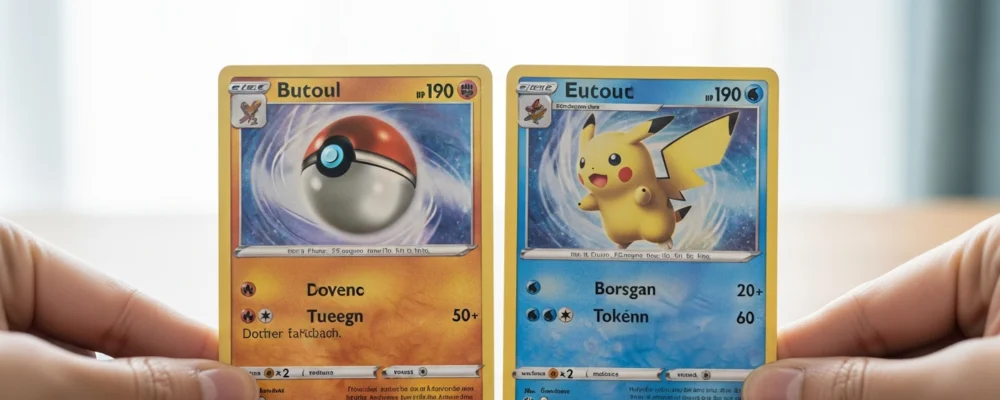
How to tell a fake Pokemon card fast starts with five checks you can do with your bare hands and a light source. No tools, no apps, no expertise required. Most fakes fail two or three of these instantly.
Here is a quick-reference table before we go deeper. These are the five checks ranked by speed and reliability.
| Check | Time Needed | Reliability | Tools Required |
|---|---|---|---|
| Card back pattern | 3 seconds | 🔥 High impact | ❌ None |
| Light test (translucency) | 5 seconds | 🔥 High impact | ❌ None |
| Print sharpness and colors | 10 seconds | 🔥 High impact | ❌ None |
| Font accuracy | 15 seconds | 🟡 Partial | ❌ None |
| Holographic pattern check | 10 seconds | 🟡 Partial | ❌ None |
Run these five in order. If a card fails check one or two, skip the rest and walk away.
Check the card back and light test first
The card back is the fastest filter available. Authentic Pokémon cards have a deep, consistent royal blue with a clearly defined Poké Ball logo in the center. Fakes almost always show a faded, greenish, or overly dark blue that looks visibly off the moment you compare it to a real card.
Place the card back-to-back with a known genuine card. Color mismatch is immediately obvious. According to TCGplayer, back color deviation is one of the most consistent tell-tale signs across counterfeit batches.
Now hold the card up to a light source. Real cards are slightly opaque due to their layered construction. A fake will often appear brighter, more translucent, or uneven under light. This is the light test, and it catches single-layer counterfeits instantly. Our full Pokémon card fake vs real guide covers this in greater detail if you want to go deeper.
Inspect print quality, colors, and fonts
Flip the card. Look at the artwork. Genuine cards have crisp, saturated prints with no visible dot patterns under normal light. Fakes frequently show:
- Blurry or pixelated artwork edges
- Washed-out or oversaturated colors vs. the original
- Visible halftone dots without a magnifying glass
- ✅ Inconsistent black borders (too thick, too thin, or uneven)
Fonts are equally telling. Pokémon TCG uses licensed, tightly controlled typefaces. On fakes, HP numbers often sit slightly off-center, attack names appear in the wrong weight, and the card name font looks subtly stretched or compressed. These details are small but unmistakable once you know what to look for.
Check the energy symbols too. Real symbols are clean geometric shapes. Counterfeit energy icons frequently have jagged edges or slight size inconsistencies compared to a genuine reference card. Knowing standard Pokémon card dimensions also helps you spot cards that are marginally oversized or undersized, another common fake giveaway.
How to tell a fake Pokemon card by its physical feel and construction
The rip test and the black layer inside
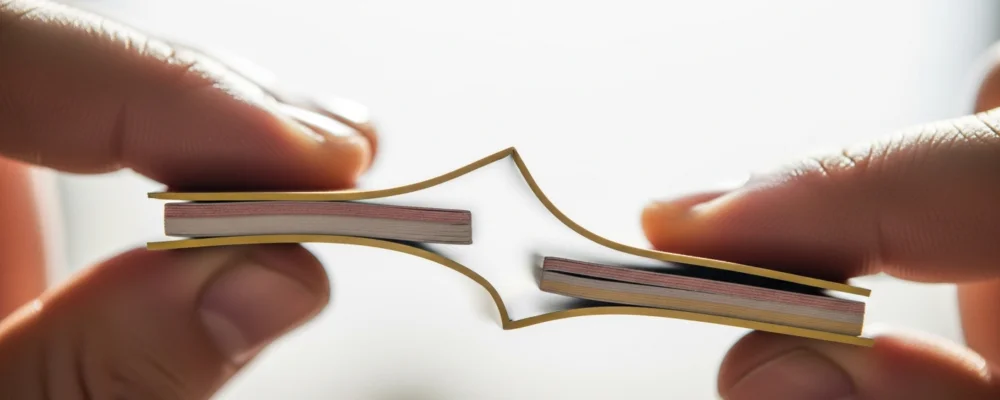
How to tell a fake Pokemon card by feel starts with one destructive but definitive method: the rip test. Tear a sacrificial card down the middle. A genuine Pokémon card reveals a thin black inner layer sandwiched between two white outer layers. This construction is unique to official prints.
Counterfeit cards almost never replicate this. Most fakes show:
- A single homogeneous white layer with no black core
- A grey or muddy middle layer that bleeds into the white
- ❌ Clean edges that peel apart too easily, like cheap cardstock
Obviously, you would not rip a card you plan to keep or sell. Use a bulk common you own as a reference. According to PokéGym’s anatomy of a fake Pokémon card, the absence of this black layer is one of the most reliable physical indicators of a counterfeit, even more consistent than print quality alone.
The black layer also explains the light test from the previous section. That layer is what creates the slight opacity in real cards. No black core means more light passes through, instantly flagging the fake.
Edge wear, texture, and card weight
Hold the card. Feel it. Genuine cards have a slightly textured, semi-glossy surface on the front and a matte-to-slightly-rough finish on the back. Fakes often feel slick, plasticky, or unusually stiff.
Run your thumbnail along the edge. Real cards:
- ✅ Have tight, clean edges that do not separate or layer-peel
- Show minor natural wear consistent with their age and handling
- Feel slightly flexible, not rigid like a laminated sheet
Card weight is another fast check. Official Pokémon TCG cards weigh approximately 1.78 grams. Many counterfeits run noticeably lighter or heavier. A basic postal scale costs under ten dollars and catches this instantly. Pair this with our complete guide to standard Pokémon card dimensions to cross-reference size alongside weight.
🎯 Texture and weight checks take under ten seconds. If a card feels wrong before you even look at it closely, trust that instinct. Physical construction is where counterfeiters consistently cut corners, and your hands will often spot what your eyes miss.
How to tell a fake Pokemon card when buying sealed products and slabs
Red flags on sealed booster boxes and packs
Sealed products are not automatically safe. Counterfeiters have moved upstream. Fake booster boxes, ETBs, and even shrink-wrapped packs flood the secondary market, especially on resale platforms.
The first thing I check is the shrink wrap itself. Genuine Pokémon products use a tight, almost seamless wrap with no excess plastic folds at the corners. Fake boxes often show loose edges, uneven tension, or a slightly different plastic sheen. Re-sealed products are even trickier: look for heat marks, bubbles, or a faint chemical smell near the seam.
Pack weights also matter. Legitimate packs have a consistent, uniform weight across a box. Significant variance between packs in the same box is a serious red flag. A cheap postal scale catches this before you open a single pack.
Here are the most reliable visual red flags on sealed products:
- ✅ Legitimate holographic sticker on the box flap, with crisp detail and correct placement
- ❌ Blurry or pixelated artwork on the box exterior, especially on card art previews
- ⚠️ Missing or misspelled legal text on the back panel
- ❌ Incorrect set symbol size or color on pack fronts
- 🟡 Unusually low price: if a booster box is priced 30%+ below market, verify before buying
According to Cardmarket’s counterfeit guidance, sealed product fakes are increasingly sophisticated and often only detectable by comparing the suspected item directly against a verified retail copy. When in doubt, buy from authorized retailers or well-reviewed sellers with verifiable feedback history.
The table below summarizes the fastest checks for sealed products at a glance.
| Check | Genuine Product | Fake Product | Impact |
|---|---|---|---|
| Shrink wrap fit | ✅ Tight, seamless | ❌ Loose, folded edges | 🔥 High impact |
| Box artwork clarity | ✅ Sharp, vibrant print | ❌ Blurry or dull | 🔥 High impact |
| Holographic sticker | ✅ Crisp, correct position | 🟡 Misaligned or missing | 🔥 High impact |
| Pack weight variance | ✅ Consistent across box | ❌ Noticeable variation | 🟡 Partial indicator |
| Legal text on panel | ✅ Complete and correct | ❌ Missing or misspelled | 🔥 High impact |
Spotting fakes in PSA and CGC slabs
A slab does not guarantee authenticity. Counterfeit cards have been submitted to and, in rare cases, passed through grading. More commonly, scammers sell fake slabs housing genuine-looking counterfeits, or swap cards after grading.
PSA and CGC both offer online cert verification. Always verify the certification number at PSAcard.com or CGCcards.com before completing any purchase. A cert number that returns no result, or returns a different card than the one in front of you, is an immediate disqualifier.
Physical slab checks also matter. Genuine PSA slabs have a specific label font, holographic security strip, and a consistent inner well depth. Fake slabs often show label misalignment, dull holograms, or a slightly different plastic thickness. If you want to understand what certified grading costs and why it creates a paper trail, our guide on how much it costs to get a card graded explains the process in full.
Key checks for graded slabs:
- Cross-reference the cert number on the official grading company website
- Confirm the card image in the database matches exactly: set, name, variant
- Inspect the holographic strip for sharpness and correct color shift
- Check for slab seam consistency: genuine slabs have a clean, even weld line
For high-value purchases, our complete fake vs real Pokémon card guide provides a deeper breakdown of authentication steps worth adding to your due diligence routine before spending serious money on a graded card.
The most faked Pokemon cards in 2026 and how to avoid buying them
Which cards counterfeiters target most often
Counterfeiters follow the money. In 2026, the most faked Pokémon cards are consistently the highest-value singles and the most iconic vintage pieces. Knowing the hit list protects your wallet.
The cards faked most aggressively right now:
- 🔥 Charizard variants: Base Set Holo, Base Set 2, Shadowless, and ex cards from Scarlet and Violet remain the top counterfeiting targets.
- Pikachu Illustrator: the rarest print in existence attracts the most sophisticated fakes.
- Gold Star cards: Espeon, Umbreon, and Rayquaza Gold Stars from 2005-era sets are heavily replicated.
- Full Art and Secret Rare EX/GX cards: high visual complexity makes forgeries harder to detect at a glance.
- Shiny Charizard V (Shining Fates) and Alternate Art cards from Evolving Skies: both still flood secondary markets with fakes.
According to TCGplayer, the cards most frequently reported as counterfeit are the ones commanding the highest market premiums. The pattern is simple: if a card is worth over $50 on the secondary market, a fake version likely exists.
Before spending serious money, cross-reference current market prices using a reliable tool. Our guide on Pokémon card value and how to check it walks through every pricing resource worth using in 2026.
💡 New releases are not immune. High-demand cards from recent sets get faked within weeks of launch. Treat any heavily discounted new card with immediate suspicion.
Free tools and scanners to verify your Pokemon cards
Technology helps. Use it. Several free tools exist specifically to assist collectors and players in verifying authenticity before a purchase.
- Cardmarket’s counterfeit guide: Cardmarket’s official counterfeits resource provides regularly updated visual references and reported fake patterns.
- PSA and CGC cert lookup: free cert verification at PSAcard.com and CGCcards.com, essential for any graded card purchase.
- TCGplayer marketplace price history: sudden price anomalies on listings often signal counterfeit flooding.
- ✅ Pokellector and Pokémon Card Database: cross-reference exact set symbols, card numbers, and print variants against official records.
- CardScan apps (iOS and Android): several free scanner apps now flag known fake versions using image-recognition databases updated in 2026.
No single tool is foolproof on its own. Stack multiple checks: scan the card, verify the cert if graded, confirm pricing history, and apply the physical tests covered earlier in this guide.
For a deeper authentication walkthrough, our complete fake vs real Pokémon card guide covers every verification layer in detail. The most reliable protection remains combining digital tools with hands-on physical inspection, every single time.
Frequently Asked Questions
How do you verify your Pokémon cards?
To verify your Pokémon cards, check the card’s texture, print quality, and the light test by holding it up to a light source. You can also use the official Pokémon Card Database to cross-reference artwork, set symbols, and card numbers against your physical card.
How to spot PSA fakes?
PSA fakes often feature altered or reprinted labels on slabs, mismatched cert numbers, or blurry holographic stickers. Always verify a PSA cert number directly on the official PSA certification lookup tool before purchasing a graded card from any seller.
What are the most faked Pokémon cards?
The most commonly faked cards include Charizard, Pikachu, and rare holographic cards from the Base Set, as well as high-value modern cards like Rainbow Rares and Secret Rares. Their high resale prices make them frequent targets for counterfeiters.
What are common signs of fake cards?
Common signs include incorrect font weight, washed-out colors, missing texture on the card back, and a flimsy feel. Fake cards also often fail the rip test, revealing a solid interior rather than the authentic black layer found in genuine Pokémon cards.