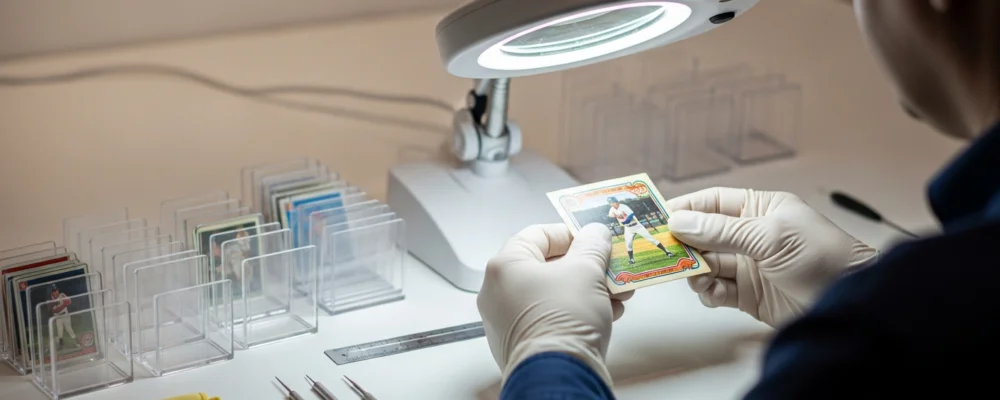
Key takeaways: What card grading really costs in 2026
Getting a card graded isn’t cheap. Understanding how much it costs to get a card graded saves you from overpriced mistakes and helps you decide which cards actually deserve professional authentication.
- ✅ PSA Standard service starts at $25 per card with 65-day turnaround, making it the baseline cost most collectors budget for when grading modern pulls or mid-tier vintage.
- 🔥 Express grading can push costs above $150 per card depending on declared value and speed tier — only financially justified when flipping high-demand chase cards before market hype cools.
- 💡 Hidden fees add 15-30% to your total bill through mandatory insurance, return shipping, and minimum order requirements that casual submitters often overlook until checkout.
- ⚠️ CGC and BGS offer $18-20 bulk tiers that undercut PSA pricing for volume submissions, especially useful when grading complete modern set runs or draft chaff with gem mint potential.
- 🎯 UK collectors using ACE Grading pay £12-18 per card domestically, eliminating international shipping risks and customs delays that plague transatlantic PSA submissions from Europe.
- Breaking even requires raw card value exceeding grading costs by 2.5x minimum — the precise threshold calculation later in this guide prevents you from losing money on cards that won’t recoup their investment even at PSA 10.
How much does PSA grading cost: Full pricing breakdown
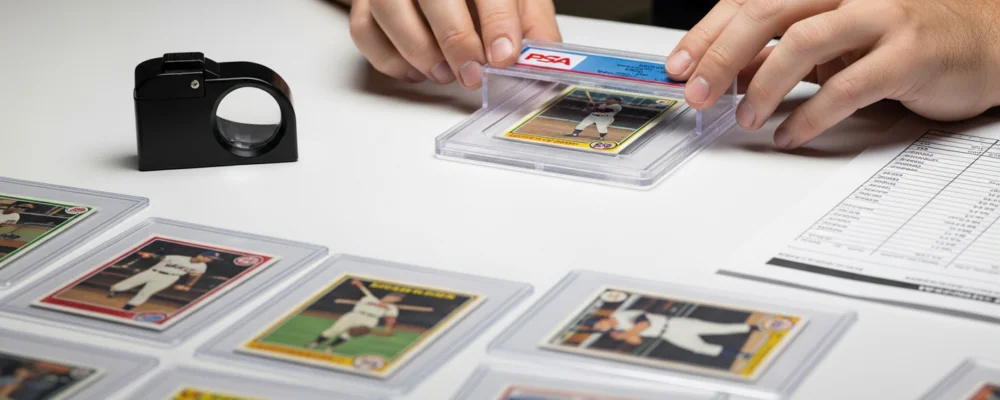
PSA membership tiers and their impact on grading costs
PSA operates a tiered membership model that directly affects how much it costs to get a card graded. Understanding these tiers prevents you from overpaying through the wrong submission route.
Non-members face the harshest pricing. PSA Standard service starts at $25 per card with 65-day turnaround for members, but walk-up submissions through authorized dealers can push that baseline to $30-35 per card before dealer markup. Collectors submitting more than 10 cards annually save money by joining.
Here’s how PSA membership tiers stack up in 2026:
| Membership Tier | Annual Fee | Standard Service | Express Service |
|---|---|---|---|
| Non-member | $0 | $30-35/card | $175/card |
| Collector | $99 | $25/card | $150/card |
| Dealer | $249 | $22/card | $125/card |
| Authorized Dealer | Invitation only | $18/card (bulk) | $100/card |
The Collector tier pays for itself after 20 Standard submissions. 💡 Serious collectors who check Pokémon card values regularly and grade 30+ cards yearly recover that $99 fee through per-card savings alone.
Value tier restrictions matter more than the sticker price. PSA limits certain service levels by declared card value—Standard service caps at $499 per card, Value tier at $999, and anything above requires Express or Super Express pricing. Submitting a $2,000 Charizard forces you into the $150+ tier regardless of membership status.
As a collectionneuse who batches submissions quarterly, I learned this the hard way. A single high-value vintage card in a 20-card Standard order triggered an upcharge notice after PSA received the shipment, converting my entire batch to the higher tier and doubling my invoice.
Hidden fees collectors often miss: shipping, insurance, and upcharges
The advertised grading fee represents only 60-70% of your actual cost. Hidden fees collectors often miss can inflate your final bill by $8-15 per card through mandatory add-ons that PSA doesn’t spotlight in headline pricing.
According to r/PokeInvesting community calculations, the true cost breakdown for a 10-card Standard submission averages $38-42 per card after fees, not the $25 base rate PSA advertises.
Here’s what catches collectors off guard:
| Fee Type | Typical Cost | Avoidable? |
|---|---|---|
| Return shipping (tracked) | $40-75 | ❌ No |
| Insurance (declared value) | 1.5-3% of total | ⚠️ Not recommended |
| Inbound shipping | $15-30 | 🟡 Partial (local drop-off) |
| Minimum order fee | $0-50 | ✅ Yes (meet minimums) |
| Declared value upcharge | $25-100/card | 🟡 Partial (accurate estimates) |
Insurance costs scale with your declared total. A 20-card submission valued at $10,000 triggers $150-300 in mandatory insurance coverage through PSA’s carrier, not your personal shipper. This protects both parties but adds a non-negotiable percentage fee that casual submitters rarely budget for.
Return shipping hits harder than expected. 🔥 PSA ships graded slabs via FedEx with $25,000+ insurance included—you can’t downgrade to cheaper USPS even if your cards are worth $500 total. That $60 return label gets divided across your submission, adding $6 per card on a 10-card order or $3 per card on a 20-card batch.
Parlons cartes: I once submitted 8 modern pulls expecting a $200 bill ($25 × 8). Final invoice? $312. Return shipping ate $68, insurance on declared $1,200 value added $36, and a sub-10-card order minimum triggered a $8 processing bump. Those “minor” line items ballooned my per-card cost from $25 to $39.
Accurate declared values prevent the costliest surprise. Underestimate a card’s worth and PSA bumps it mid-grading to the higher service tier with a mandatory upcharge notice. For detailed pricing strategies across all major graders, check the complete Pokémon card grading cost breakdown.
How much does it cost to get cards graded with CGC, BGS, and ACE
CGC Cards grading tiers and turnaround times
CGC Cards operates three service tiers that balance speed against cost, with no membership fee required. You pay per card based on declared value brackets and desired turnaround window. This transparent pricing model appeals to collectors who submit occasionally rather than maintaining annual PSA memberships.
Standard tier handles cards declared under $250 at $20 per card with 30-business-day turnaround. Express bumps to $35 per card for 10-business-day grading, while Super Express delivers 3-business-day results at $80 per card. 🔥 Cards valued $250–$999 automatically jump to $35 minimum, and anything declared $1,000+ starts at $100 regardless of speed tier.
| Service tier | Max value | Cost per card | Turnaround |
|---|---|---|---|
| Standard | $249 | $20 | 30 business days |
| Express | $249 | $35 | 10 business days |
| Super Express | $249 | $80 | 3 business days |
| Standard (mid-value) | $999 | $35 | 30 business days |
| Express (high-value) | $1,000+ | $100 | 10 business days |
⚠️ CGC charges a 3% processing fee on total order value—not grading fees alone. A 10-card Standard submission costs $200 in grading plus $6 processing, bringing your true per-card cost to $20.60. This fee structure differs from PSA’s flat membership model, making CGC more economical for small batches under 20 cards.
Bulk discounts activate at 50+ cards, dropping Standard pricing to $16 per card for declared values under $100. Community group submissions through Discord servers regularly pool orders to hit these thresholds, cutting individual costs by 20% when how much does it cost to get a card graded through CGC becomes a shared effort.
UK grading alternatives: ACE and Trust Grading pricing
ACE Grading dominates the UK market with pricing in pounds sterling and domestic turnaround times that eliminate international shipping delays. Their Standard service costs £12 per card with 20-business-day grading, while Express hits £20 for 5-business-day results. No membership required, no minimum order quantities.
Trust Grading undercuts ACE slightly at £10 per card for Standard (25 business days) but charges £25 for Express compared to ACE’s £20. Both accept Pokémon, Magic, sports cards, and One Piece TCG without the declared-value upcharges that plague PSA submissions. UK collectors avoid customs delays and international return shipping fees that add £40–60 to PSA orders.
| UK grader | Standard cost | Express cost | Key advantage |
|---|---|---|---|
| ACE Grading | £12/card | £20/card | ✅ Fastest UK turnaround |
| Trust Grading | £10/card | £25/card | ✅ Lowest base price |
| PSA (UK sub) | $25 + shipping | $75 + shipping | 🟡 Global resale recognition |
Parlons cartes: I submitted identical raw vintage holos to ACE and PSA simultaneously. ACE returned graded slabs in 18 business days at £12 each; PSA took 41 calendar days at $25 plus $68 international return shipping. For cards valued under £200 where checking Pokémon card value reveals modest resale potential, ACE’s £12 all-in cost beats PSA’s $33 effective per-card expense every time.
💡 ACE and Trust slabs lack PSA’s universal buyer recognition on eBay and auction houses, limiting resale premiums. UK-based collectors targeting domestic sales see strong ROI, while sellers eyeing international markets still favor PSA despite higher upfront grading costs when determining how much does it cost to get a card graded for maximum resale liquidity.
Is getting cards graded worth it: When grading makes financial sense
Break-even calculator: Raw card value vs grading investment
Simple math determines whether grading pays off. Add PSA’s $25 base fee plus $15 average shipping plus $5 insurance to reach $45 total cost. Your raw card must sell for at least $90 graded to justify that investment—double your grading expense covers the raw purchase price you’d otherwise accept.
CGC’s $20 tier drops the break-even threshold to $80 graded value. ✅ Cards worth $40–60 raw hit profitability faster with CGC than PSA, while cards under $30 raw rarely justify any professional grading unless you’re banking on long-term appreciation rather than immediate resale.
En tant que collectionneuse: I track every submission in a spreadsheet—grading cost, raw purchase price, final graded sale price. Cards that returned less than 1.5× total investment get flagged red; anything below break-even teaches me which raw values simply don’t support the grading fees involved. How much does it cost to get a card graded matters less than whether the graded premium covers that expense.
💡 Declared-value upcharges destroy profitability on mid-tier cards. A $150 raw holo triggers PSA’s $40 upcharge tier, pushing total cost to $85. That card needs $170+ graded value just to break even—barely worth the risk when a PSA 8 grade collapses resale potential.
Cards that gain the most value from professional grading
Vintage Wizards of the Coast holos multiply value fastest. A raw Base Set Charizard sells for $300–400 in near-mint condition; that same card graded PSA 9 commands $1,200–1,500. The $45 grading investment unlocks $900+ premium because buyers trust third-party authentication over seller photos when considering Pokémon card fake vs real concerns on high-value vintage.
Modern chase cards from recent sets show weaker grading ROI. A raw Charizard ex from Obsidian Flames sells for $80; graded PSA 10 pushes that to $140. Your $45 grading cost eats 56% of the $60 premium—barely profitable after fees and shipping. Décortiquons ensemble why this happens: modern print quality produces more PSA 10 candidates, flooding the graded market and compressing premiums.
- 🔥 1st Edition WOTC holos: 4–5× graded multiplier on PSA 9+ grades
- ✅ Gold Star cards (2004–2007): 3–4× premium for authenticated slabs
- ✅ Trophy cards and tournament promos: grading proves legitimacy on $500+ raws
- 🟡 Modern full-art trainers: 1.5–2× multiplier, profitable only on $60+ raws
- ❌ Bulk holos under $20 raw: grading costs exceed total graded resale value
Ça change vraiment la donne when you check Pokémon card value trends before submitting. Cards trending upward in raw sales deserve grading to lock in authentication before fakes flood the market; cards with flat six-month price history won’t suddenly jump just because you paid for a slab.
Sans langue de bois: modern cards need perfect centering and zero edge wear to justify how much does it cost to get a card graded relative to their modest resale ceiling. Vintage cards forgive minor flaws because scarcity and nostalgia drive premiums that modern overproduction can’t replicate in 2026.
How to reduce your card grading costs: Bulk submissions and group orders
Bulk grading discounts: How volume submissions cut per-card costs
Bulk submissions slash how much does it cost to get a card graded by 40–60% per card when you send 20+ cards in one order. PSA’s Value tier drops from $25 per card (single submission) to $15 per card when you hit the 50-card minimum—instantly saving $500 on a full box of vintage holos.
💡 The math works even when mixing grades. You’ll receive PSA 8s, 9s, and 10s back, but your upfront cost stays locked at the bulk rate. A 50-card submission at $15 per card ($750 total) beats paying $25 per card for individual orders—even if only 30 cards grade PSA 9 or higher.
CGC and BGS offer similar volume tiers. CGC’s bulk service starts at 25 cards for $12 per card (versus $20 for singles), while BGS requires 50-card minimums for their $18 rate. Décortiquons ensemble the real breakpoint: you need enough gradeable cards in your collection to justify one large shipment instead of trickling cards in monthly.
- 🔥 PSA 50-card bulk: $15/card saves $500 versus individual $25 submissions
- ✅ CGC 25-card minimum: $12/card cuts costs 40% on modern sets
- ✅ BGS 50-card tier: $18/card ideal for vintage WOTC holos
- 🟡 Turnaround trade-off: bulk orders add 60–90 days versus express tiers
The catch? Bulk tiers force longer turnaround windows—120 days typical for PSA Value bulk in 2026. If you’re grading for immediate resale during a price spike, express tiers justify their premium. For long-term Pokémon card value preservation, bulk rates make perfect sense.
Community group submissions through Discord and local card shops
Group submissions through collector communities unlock bulk rates without needing 50 cards yourself. Discord servers like Pokémon Investors Club and local card shop programs pool orders from 10–20 collectors, splitting one bulk submission to hit minimum thresholds.
Here’s how it works: a group organizer collects cards, manages PSA grading prices payments, and ships the consolidated order under their dealer account. You pay $15–$18 per card (bulk rate) plus a $2–$5 organizer fee—still 35% cheaper than solo submissions at $25 per card.
À la table de jeu, I’ve used local shop group orders three times for modern chase cards. My shop runs monthly PSA pools; I drop off cards on the 15th, they ship bulk orders on the 1st, and I collect slabs 90 days later. Zero shipping hassle, zero membership fees—just the bulk rate plus $3 per card handling.
- ✅ Discord group subs: $15–$18/card with $2–$5 organizer fee
- ✅ Local shop pools: no PSA membership required, shop handles logistics
- ✅ Verified return: reputable organizers provide tracking and slab photos
- ⚠️ Vet your organizer: check references and submission history before handing off $500+ in cards
The risk factor? You’re trusting a third party with your collection. Sans langue de bois: stick to established Discord servers with 500+ members and transparent submission logs, or shops with Google reviews proving consistent grading service. Never join a “group sub” from a brand-new account with zero track record—that’s how collectors lose cards to exit scams.
When you combine bulk discounts with community pooling, how much does it cost to get a card graded drops from $45 total (PSA single + shipping + insurance) to under $22 per card. That’s the difference between profitable grading on $60 modern cards and breaking even only on $100+ vintage.
Frequently Asked Questions
How much does it cost to grade a card in the UK?
UK collectors typically pay £15-£40 per card when using PSA or BGS through European submission centers. Costs include grading fees, shipping to the US or UK facility, and return shipping. Some UK-based services offer faster turnaround at slightly higher prices.
How expensive is it to get a card graded?
Card grading costs range from $15 for bulk economy services to $300+ for express options in 2026. PSA and BGS charge $25-$75 for standard service levels. Premium tiers with faster turnaround times and higher-value cards cost significantly more, sometimes exceeding $600 per card.
Is getting cards graded worth it?
Grading is worth it for valuable cards that could increase significantly in value with authentication and high grades. Cards worth over $100 raw typically benefit most. Lower-value cards rarely justify grading costs unless submitted in bulk at discounted rates.
How hard is it to get a PSA 10 grade?
Achieving a PSA 10 is extremely difficult, representing gem mint condition with perfect centering, sharp corners, and flawless surfaces. Only 10-20% of modern cards and far fewer vintage cards achieve this grade. Even minor imperfections result in lower grades.