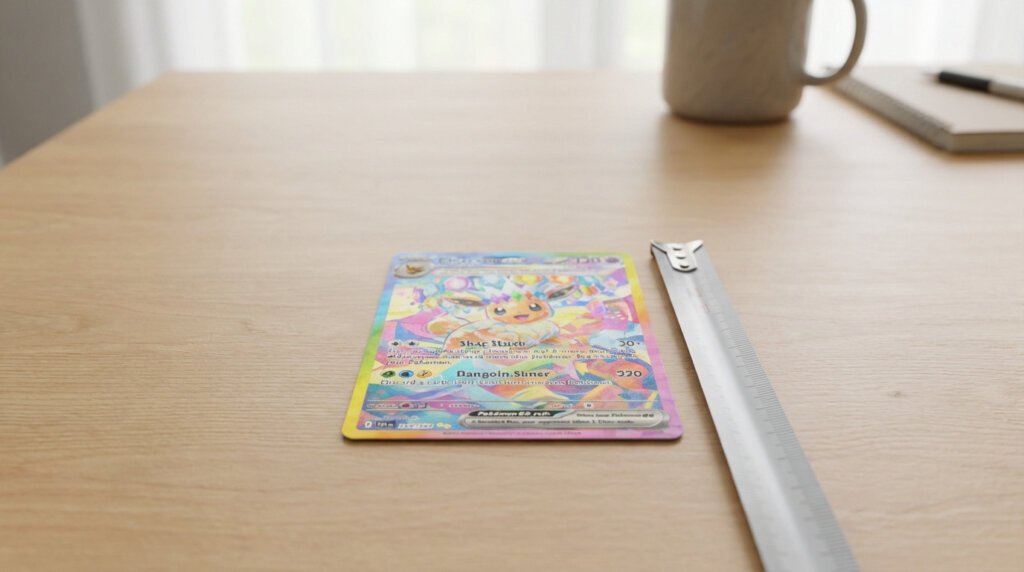
The essential takeaway: Official Pokémon cards universally measure 2.5 by 3.5 inches (63mm x 88mm), maintaining consistency across Western and Japanese sets. Mastering these precise dimensions ensures you choose the correct protection and helps you spot fakes instantly. With a specific thickness of 0.305mm, this standardized format remains your most reliable benchmark for authentication.
The Standard Pokemon Card Size You Need To Know
Buying sleeves that do not fit because you misjudged the standard pokemon card size is a frequent error that endangers the long-term condition of your collection. We provide the exact official dimensions in inches and millimeters to help you select the correct protection for every item in your binder. You will discover the truth about Japanese print variations and identify the specific accessories required to secure your investment against wear and counterfeits.
The Official Dimensions in Inches and Millimeters
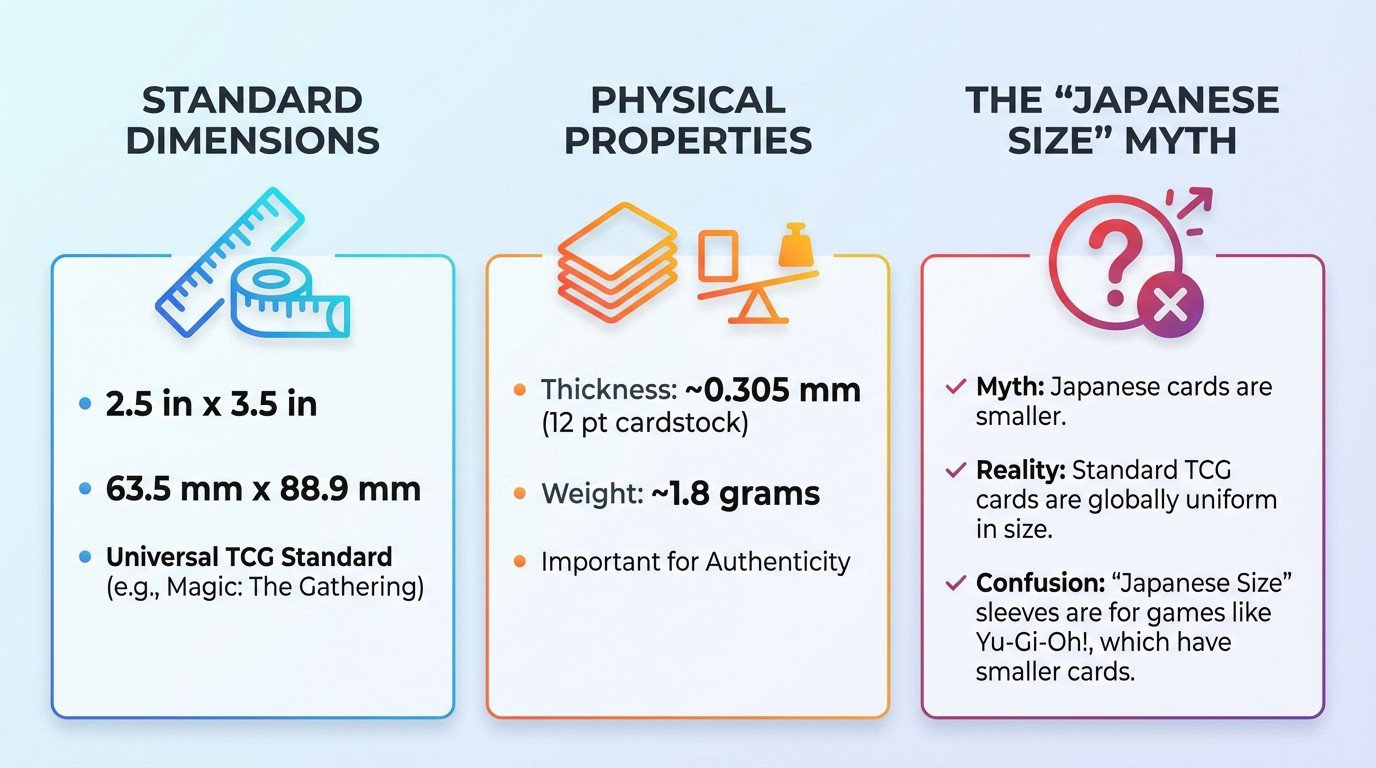
Let’s cut through the noise and look at the cold, hard numbers. The official pokemon card size sits exactly at 2.5 inches by 3.5 inches. For those using the metric system, that translates to 63.5mm by 88.9mm, though most collectors simply round it to 63mm x 88mm.
This specific geometry is the gold standard for the vast majority of Pokémon cards printed in English, French, and other Western languages. Crack open any standard booster pack from a local store, and this is the dimension you get.
Surprisingly, this format isn’t exclusive to just the Pokémon franchise. It is the « « standard » size for trading cards, shared with giants like Magic: The Gathering.
Let’s Talk Thickness and Weight
Now, consider the physical feel of the card stock itself. A genuine standard Pokémon card features a thickness of roughly 0.305 mm. That corresponds to a sturdy paper weight of approximately 12 points (pt).
Then there is the heft, weighing in at an average of 1.8 grams. It sounds like nothing, but seasoned collectors know better than to ignore this metric. Special foils might tip the scale slightly higher.
Why do these tiny fractions matter to you? Because these subtle specs are often the only indicators that help differentiate a real card from a cheap counterfeit.
The Myth of Different International Sizes
Here is a massive misconception that trips up rookies constantly. Many people believe Japanese cards are physically smaller than their English or French counterparts. That is simply false for the standard Trading Card Game; they match perfectly.
So where does this persistent rumor come from? It stems from card sleeves labeled « Japanese Size. » Those specific protectors are actually designed for games like Yu-Gi-Oh!, which use smaller cards, not Pokémon.
Beyond the Standard: Jumbo, Miniature, and Other Oddballs
Now that the standard size is clear, things get a bit tricky. Pokémon loves to release promotional cards that completely break the mold.
The Two Generations of Jumbo Cards
You have likely seen those massive cards included in special collection boxes. These are purely promotional items meant for display, so you definitely cannot slip them into a tournament deck for actual play.
Here is the detail most collectors miss: there are actually two « generations » of these giants. If you pick up a Jumbo card released after 2020, it sports a much more standardized size of 5.75 x 7.75 inches (146mm x 197mm).
Before that date, it was the Wild West. Pre-2020 Jumbos were a chaotic mix of sizes, often significantly larger, which makes finding the right binder pages a total nightmare.
What About Those Tiny Japanese Cards?
Then you have the oddities that shrink the scale. We are talking about specific Japanese releases like the vintage Carddass series. These are distinct collectibles and are not part of the official Trading Card Game circuit.
If you measure them, you will spot the difference immediately. These cards typically clock in at 59mm x 86mm. That is essentially the same footprint as a Yu-Gi-Oh! card, which explains why so many people get confused about Japanese Pokémon card sizing.
A Closer Look at Japanese vs. Western Cards
While we established that standard cards are identical globally, seasoned experts sometimes argue otherwise. If you look close enough at specific eras, tiny discrepancies do exist in the manufacturing history.
A handful of older Japanese print runs can measure roughly 2.36 x 3.39 inches (about 60mm x 86mm). It is a microscopic difference, usually resulting from the factory cutting process rather than a deliberate design choice by the creators.
Honestly? For 99% of collectors, this variation is invisible. It won’t affect your sleeves, your binders, or your gameplay one bit.
Why Does Pokemon Card Size Even Matter?
We’ve talked millimeters and inches, but practically, why is this standardization such a big deal? It isn’t just for the sake of precision.
Protecting Your Collection: The Sleeve and Binder Game
You need to understand the direct link between card dimensions and safety. The entire accessory ecosystem—sleeves, toploaders, binders—is engineered specifically around that 63mm by 88mm standard.
Here is the risk. Jamming a Pokémon card into a « Japanese Size » sleeve will bend it or leave edges exposed. It is literally the quickest way to wreck your collection.
- Perfect Fit Sleeves (64mm x 89mm): The first layer, hugging the card tightly.
- Standard Sleeves (66mm x 91mm): The outer layer for gameplay and general protection.
- Toploaders (approx. 76mm x 102mm): Rigid plastic holders for maximum impact protection.
Keeping It Fair: Tournament Rules and Anti-Cheating
In official tournaments, card dimensions are strictly regulated for a reason. A card with a different size or thickness stands out in a deck, making it instantly recognizable to a sharp opponent.
The consequences are brutal. Using such a card, even by accident, is flagged as a « marked card. » Judges consider this cheating, and it often leads straight to disqualification.
Spotting Fakes: Your First Line of Defense
Think of dimensions as your primary anti-counterfeit tool. One of the most glaring signs of a fake Pokémon card is simply incorrect physical sizing compared to the real deal.
Counterfeiters frequently get the cutting wrong. Their fakes are often slightly too big or small, with poorly rounded corners. They just don’t sit right inside standard sleeves.
Here is a pro tip. Always keep a verified official card nearby to compare size, rigidity, and texture against any suspicious new acquisition.
A Practical Guide to Measuring and Protecting Your Cards
Knowing the numbers is great, but applying that knowledge is better. Let’s see how to keep your collection pristine for years.
Choosing the Right Protection for Every Card Type
You wouldn’t put a Jumbo card in a standard sleeve. Every card format demands its own specific armor to survive.
Here is the breakdown to match your cardboard with the perfect shield. Stop guessing and use this chart.
| Card Type | Recommended Sleeve Size | Recommended Hard Case |
| Standard Card | Perfect Fit (64x89mm) + Standard Sleeve (66x91mm) | Standard 3″x4″ Toploader |
| Jumbo Card (Post-2020) | Specific Jumbo Sleeves (approx. 148x200mm) | Specific Jumbo Toploader or Binder |
| Jumbo Card (Pre-2020) | Custom/Variable Size Sleeves | Custom Framing or Portfolio |
| Miniature/Japanese-size Card | Japanese Size Sleeve (62x89mm) | Japanese Size Toploader |
The Double-Sleeving Technique Explained
This is the ultimate defense for valuable cards. Double-sleeving uses two layers of plastic to create a seal against dust.
First, slide the card upside down into a « perfect fit » inner sleeve. Then, place that bundle into a standard sleeve with the opening facing up.
Personally, I double-sleeve anything with value. It is cheap peace of mind against future heartbreak.
Common Mistakes to Avoid When Storing Your Cards
Protecting your collection isn’t just about gear; it is about avoiding habits that destroy value.
Most damage comes from bad storage. If you want to keep your cards mint, steer clear of these disasters:
- Using rubber bands: The absolute worst thing you can do. They indent and damage edges.
- Direct sunlight exposure: Fades colors faster than you can imagine.
- Cheap binder pages: The PVC in cheap plastics can literally melt onto your cards.
- Forcing cards: Never jam a card.
The Bigger Picture: Standardization in the Trading Card World
How Pokémon Helped Cement the « Standard » TCG Size
You might assume Nintendo invented these dimensions, but that gives them too much credit. Back in the 1950s, Topps actually established the 2.5 by 3.5-inch rule for baseball cards because it fit perfectly into pockets while leaving space for stats. It was purely practical.
Then came the gaming giants. When Magic: The Gathering and later Pokémon adopted this exact footprint, they didn’t just follow a trend; they locked it in. With billions of units printed, this specific ratio is now the standard de facto for the entire industry.
The Corner Radius: A Detail Only Experts Notice
Here is where things get tricky for the untrained eye. While the height and width might match perfectly, the corners tell a different story. It’s a tactile thing. If you run your thumb along the edge, seasoned collectors can often identify the brand blindfolded.
Take a Magic: The Gathering card, for instance. It feels sharper. That’s because MTG corners use a tighter 2.5mm radius, making them pointier. Pokémon opts for a softer, rounder cut. It’s a tiny manufacturing quirk, but it changes how the card sits in a sleeve.
What the Future Holds for Card Sizes
Could The Pokémon Company wake up tomorrow and shift the pokemon card size? I’d bet my entire vintage collection against it. The industry momentum is just too heavy to stop now.
Imagine the absolute chaos. Every binder, deck box, and grading slab currently on the market would instantly become obsolete. It would be a logistical disaster, alienating the very fanbase that keeps the lights on.
- The 2.5″ x 3.5″ size is the unshakable standard.
- Special sizes like Jumbos are fun exceptions, not the rule.
- Knowing these dimensions is key to protecting your investment.
Mastering the standard Pokémon card size of 2.5 by 3.5 inches is crucial for your hobby. You now possess the knowledge to choose the right protection and identify fakes instantly. Use these precise measurements to safeguard your collection effectively. You are ready to preserve your cards for the future.
FAQ
What are the exact dimensions of a standard Pokémon card?
You will find that a standard Pokémon card measures exactly 2.5 inches by 3.5 inches. If you use the metric system, this translates to approximately 63.5mm by 88.9mm. This is the industry standard size for most trading card games, including Magic: The Gathering.
Are Japanese Pokémon cards smaller than English ones?
This is a very common myth, but the answer is no. Standard Japanese Pokémon cards feature the exact same dimensions as English cards: 63mm by 88mm. The confusion often comes from « Japanese Size » sleeves, which are actually designed for smaller cards like Yu-Gi-Oh!, and will not fit your Pokémon collection.
How thick is a real Pokémon card?
A genuine Pokémon card has a specific thickness of approximately 0.012 inches or roughly 0.305 mm. This thickness results from the card stock used, which typically consists of two layers of paper with an opaque layer in the middle. This dimension is crucial for you to identify fakes, which often feel too flimsy or too thick.
What size are the Jumbo or Oversized Pokémon cards?
The size depends on when the card was released. Jumbo cards printed after 2020 measure 5.37 inches by 7.37 inches (136mm x 187mm). If you have older Jumbo cards from between 2000 and 2020, they are slightly larger, measuring 5.7 inches by 7.87 inches (145mm x 200mm).
Will Pokémon cards fit in standard trading card sleeves?
Yes, absolutely. Since Pokémon cards utilize the standard 2.5″ x 3.5″ layout, they fit perfectly into « Standard » size sleeves (usually 66mm x 91mm). You should avoid « Small » or « Japanese » size sleeves, as these are too tight and will bend your cards.