Key takeaways
English Pokemon booster boxes contain 36 packs while Japanese boxes hold 30 packs — a difference that directly impacts your pull rates, budget planning, and hunting strategy for chase cards. Understanding Pokemon Booster Box Pack Count lets you calculate exact odds and maximize value per dollar spent.
- 36 English packs vs 30 Japanese packs means English boxes deliver 20% more pulls per box, shifting your hit rates for ultra rares and secret rares.
- 10 cards per English pack vs 5 cards per Japanese pack translates to 360 total English cards vs 150 Japanese cards — triple the volume changes your entire opening experience.
- Japanese boxes guarantee specific hit rates (often 1 ultra rare per box minimum) while English boxes rely on statistical averages across case breaks.
- Special sets like Elite Trainer Boxes contain only 8-10 packs, making standard booster boxes the most cost-efficient path to complete your master sets.
- Original Base Set boxes held 36 packs just like modern English releases, proving this Pokemon Booster Box Pack Count standard has anchored the hobby for nearly three decades.
- Knowing the math behind box guarantees reveals exactly when buying singles beats cracking packs — a calculation that saves veteran collectors hundreds per year.
Pokemon Booster Box Pack Count: English vs Japanese Breakdown
Standard English Booster Box Pack Count
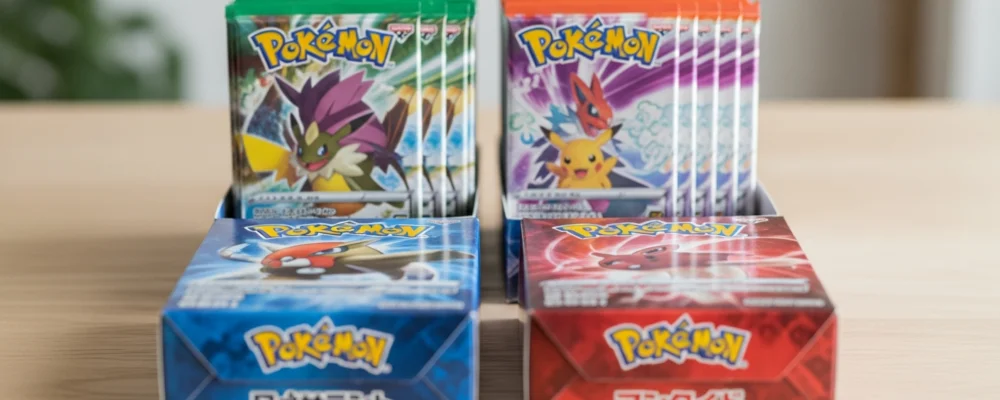
English Pokemon booster boxes lock in at 36 packs per box across virtually every mainline set released by The Pokemon Company International. This Pokemon Booster Box Pack Count standard applies whether you’re cracking Scarlet & Violet base, Crown Zenith, or any core expansion from Sword & Shield backward to the original Base Set era.
Each of those 36 packs delivers 10 cards in modern sets (11 in older releases like XY and Black & White), giving you 360 cards total when you tear through an entire English box. That volume matters when you’re chasing specific pull rates—more packs mean more swings at ultra rares, but also more bulk commons to sort.
✅ Consistency drives budget planning. Knowing every English box holds exactly 36 packs lets you calculate cost per pack instantly: divide box price by 36, compare against single-pack retail, and decide whether sealed product beats buying a full case or hunting singles.
🔥 Hit rates anchor around this 36-pack structure. The Pokemon Company designs English pull rates assuming collectors open complete boxes—roughly 2–4 ultra rares per box in recent sets, with variance for chase cards like alternate arts and gold secrets.
Japanese Booster Box Pack Count Variations
Japanese Pokemon booster boxes contain 30 packs, a permanent deviation from the English 36-pack template that reshapes your entire opening experience and pull strategy. This Pokemon Booster Box Pack Count difference isn’t arbitrary—Japanese boxes compensate with tighter guaranteed hit rates and higher-quality chase cards per box.
Here’s how the core stats compare across regions:
| Region | Packs per Box | Cards per Pack | Total Cards |
|---|---|---|---|
| English | 36 | 10 | 360 |
| Japanese | 30 | 5 | 150 |
| Korean | 30 | 5 | 150 |
Japanese packs hold just 5 cards each (versus 10 in English), slashing your total card count to 150 per box. That sounds like less value until you realize Japanese boxes deliver guaranteed ultra rare slots—often 1–2 SR (Super Rare) or better per box, compared to the statistical variance English collectors tolerate.
⚠️ Special Japanese sets break the 30-pack rule. High Class Packs like VMAX Climax or Shiny Star V contain only 10 packs per box, with each pack engineered for premium pulls. These compressed formats target veteran collectors hunting specific chase cards rather than set completion.
Korean booster boxes mirror Japanese specs—30 packs of 5 cards—but Korean print runs stay smaller, making sealed product harder to source outside Asia. Sans langue de bois: if you’re comparing Pokemon Booster Box Pack Count for budget planning, factor in shipping costs and hit rate guarantees before committing to imports over domestic English boxes.
Read also: Booster Bundle Pack Count: How Many Cards Do You Get
How Many Cards Are in a Pokemon Booster Box?
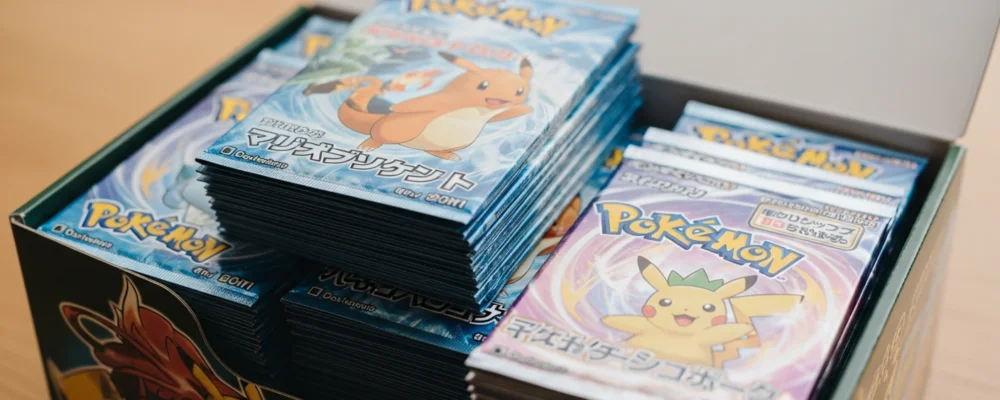
Knowing your Pokemon Booster Box Pack Count matters, but the card count per pack determines your actual pull volume and chase-card odds. English and Japanese formats diverge sharply here, reshaping how you budget openings and calculate set completion timelines.
Cards per Pack: English Sets
English Pokemon booster packs contain 10 cards across modern mainline sets (Scarlet & Violet era, Sword & Shield, Sun & Moon). Each pack follows a standard rarity distribution: 1 reverse holo, 1 rare or better, 3 uncommons, and 5 commons. ✅ This 10-card template stays consistent whether you’re cracking Paldea Evolved or Crown Zenith.
Multiply those 10 cards by the standard 36-pack booster box and you land at 360 total cards per English box. That volume supports set completion for base rarities, but ultra rares (illustration rares, special arts, gold cards) require multiple boxes due to pull rate variance. À la table de jeu, I’ve opened 36-pack boxes that delivered 4 ultra rares and others that gave me just 1—English hit rates remain probabilistic, not guaranteed.
Cards per Pack: Japanese Sets
Japanese Pokemon packs hold just 5 cards, cutting the per-pack card count in half versus English releases. Despite fewer cards, Japanese packs compensate with tighter guaranteed slots: every pack includes 1 holo or better, eliminating the common-heavy pulls English collectors tolerate.
Parlons cartes: Japanese 5-card packs feel engineered for quality over quantity. You sacrifice bulk commons but gain consistent holo presence, making each pack opening feel more rewarding even when you don’t hit a chase card.
Total Card Count Math
Here’s how Pokemon Booster Box Pack Count translates to actual cards in hand:
- 🔥 English booster box: 36 packs × 10 cards = 360 cards total
- 🔥 Japanese booster box: 30 packs × 5 cards = 150 cards total
- 🔥 Japanese High Class Pack: 10 packs × 7 cards = 70 cards total
That 360 vs 150 gap looks drastic until you factor in guaranteed ultra rare slots in Japanese boxes. English boxes give you more cards but fewer hit guarantees. Japanese boxes trim the fat and frontload premium pulls. Sans langue de bois: if you’re chasing specific illustration rares or gold cards, Japanese boxes often deliver better ROI per dollar spent despite the lower card count.
⚠️ Case purchases amplify these differences—6 English boxes yield 2,160 cards versus 900 from 6 Japanese boxes, but Japanese cases guarantee proportionally more ultra rares across that smaller card pool.
Pokemon Booster Box Pack Count Across Special Sets
Elite Trainer Boxes and Premium Collections
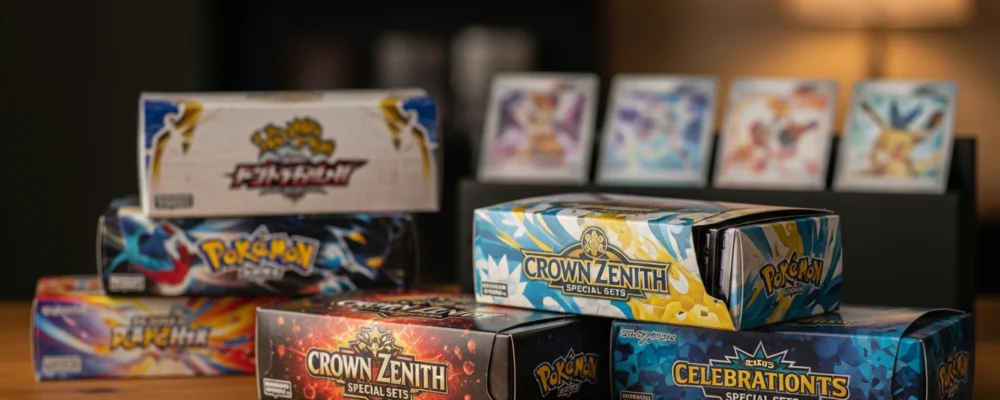
Elite Trainer Boxes (ETBs) hold 8 booster packs—a quarter of a standard 36-pack booster box. That fixed count remains consistent across English sets from Sword & Shield through current 2026 releases. Premium Collections vary wildly: mini tins bundle 2–4 packs, while deluxe figure boxes can include 10+ packs depending on promotional tie-ins.
🎯 En tant que collectionneuse, I track ETBs separately from booster boxes when calculating Pokemon Booster Box Pack Count odds. The 8-pack structure means you’re opening roughly one-fifth the volume, which cuts your chase card probability proportionally. Premium Collections feel like bonus product rather than serious opening runs—great for casual collectors, less ideal for competitive pull hunters.
Here’s how special-edition pack counts stack up against standard boxes:
| Product Type | Pack Count | Status |
|---|---|---|
| Elite Trainer Box | 8 packs | 🟡 Casual Opening |
| Premium Collection | 4–12 packs | 🟡 Variable Value |
| Mini Tin | 2–4 packs | ❌ Low Volume |
| Standard Booster Box | 36 packs (English) | ✅ Full Opening |
| Japanese Booster Box | 30 packs | ✅ Guaranteed Hits |
⚠️ Premium Collections often price at $50–$80, netting you $3–$5 per pack equivalent—worse than buying loose packs at retail. Only chase these for exclusive promo cards or collector tins you actually want to display.
Display Boxes vs Booster Bundles
Display boxes (the cardboard trays stores use for shelf placement) technically hold 36 booster packs identical to sealed booster boxes, but retailers break these open to sell individual packs. Booster bundles—shrink-wrapped 3-pack or 6-pack blisters—serve impulse buyers at big-box stores and never guarantee the same pull distribution as factory-sealed boxes.
Sans langue de bois: display boxes lack the factory seal that protects Pokemon Booster Box Pack Count integrity. Unscrupulous sellers can weigh packs, cherry-pick heavy ones, then reseal the display with leftover lightweights. Always verify factory shrink-wrap and Pokemon Company seals before paying booster-box prices for what might be a resealed display.
Booster bundles carry even less pull security. That 3-pack blister at Target? Totally random pack selection with zero guarantees. You might crack three commons-only packs or stumble into a god pack—it’s pure lottery versus the structured hit rates built into sealed 36-pack boxes.
How Original Base Set Boxes Compare
Original Base Set booster boxes from 1999 held 36 packs of 11 cards each, matching modern English Pokemon Booster Box Pack Count but delivering 396 total cards versus today’s 360. Wizards of the Coast printed Base Set with looser pack configurations: some boxes mixed different pack artwork, and rarity distribution felt less engineered than current Pokemon Company releases.
Décortiquons ensemble: Base Set boxes guaranteed 1 holo rare per 3 packs on average, but no hard-coded ultra rare slots existed. You could rip an entire box and pull just 10–12 holos, whereas modern English boxes soft-guarantee 2–3 ultra rares minimum through weighted pack distribution. For more context on how sealed cases preserve these vintage ratios, check How Many Booster Boxes in a Case.
| Era | Cards per Pack | Hit Structure |
|---|---|---|
| Base Set (1999) | 11 cards | ❌ No Guarantees |
| Neo-era (2000–2002) | 11 cards | 🟡 Loose Ratios |
| Modern English (2026) | 10 cards | ✅ Soft Guarantees |
| Modern Japanese (2026) | 5 cards | 🔥 Hard Guarantees |
Vintage boxes trade modern guarantees for nostalgia and scarcity value. Base Set boxes now command $15,000+ sealed—you’re paying for collectible status, not optimized pull rates. If you’re chasing actual playable hits or illustration rares, modern boxes deliver better card-for-card value despite the smaller per-pack count.
Why Pokemon Booster Box Pack Count Matters for Collectors
Pokemon Booster Box Pack Count directly influences which sealed products deliver the best odds and long-term value. As a collectionneuse who’s cracked hundreds of boxes across both regions, I’ve learned that 36-pack English boxes and 30-pack Japanese boxes aren’t just regional quirks—they shape your entire pull strategy and budget allocation.
Pull Rates and Box Guarantees
English 36-pack boxes soft-guarantee 2–3 ultra rares minimum through weighted distribution. Soft-guarantee means you’ll almost always hit that floor, but outlier boxes with 1 or 4 ultra rares exist. Japanese 30-pack boxes hard-lock ratios: every box contains exactly 2 secret rares and 6 double rares, zero variance. Parlons cartes: if you’re risk-averse, Japanese boxes eliminate the nightmare scenario of whiffing on chase cards.
🎯 English boxes favor volume hunters. Pulling 3+ ultra rares happens often enough to justify the gamble, and you get 20% more packs to rip for your community openings or resale singles. Japanese boxes favor predictable ROI—you know your floor value before peeling the shrink wrap.
Modern English sets like Surging Sparks guarantee 1 illustration rare per box, but placement varies wildly—pack 4 or pack 34, who knows. Japanese sets distribute hits more evenly: you’ll typically pull a double rare every 5 packs, preventing the soul-crushing dead zones where 12 consecutive packs yield only holos.
Value per Pack: 36-Pack vs 30-Pack Boxes
Cost-per-pack math tilts heavily Japanese. A $50 English box breaks down to $1.39 per pack; a $45 Japanese box costs $1.50 per pack but delivers double the hit density per card opened. You’re paying 8% more per pack for significantly better chase-card odds.
- ✅ English advantage: Lower barrier to entry, easier to find retail, bulk commons for deck-building.
- 🔥 Japanese advantage: Guaranteed secret rares, premium card stock, tighter QC on centering and print lines.
- 🟡 Hybrid strategy: Buy English for sealed collection appreciation, crack Japanese for personal chase hits.
Sans langue de bois: if you’re chasing a $200 alt art and need certainty, 30-pack Japanese boxes statistically get you there in fewer dollars spent. English boxes shine when you want maximum pack-cracking entertainment or plan to grade and flip the entire uncommon-and-up spread. For sealed investors watching case ratios, revisit How Many Booster Boxes in a Case to understand how distributor-level Pokemon Booster Box Pack Count affects case-hit guarantees.
À la table de jeu, I’ve watched players burn through 5 English boxes chasing a single Iono SAR and come up empty. That same $250 budget buys 5–6 Japanese boxes with 10–12 guaranteed secret rares. Volume or certainty—pick your poison based on whether you value the journey or the destination.