Key takeaways
The million-dollar Pokémon card market centers on fewer than a dozen cards worldwide. Understanding what Pokémon card is worth $1,000,000 helps collectors identify truly elite specimens. Only specific cards with perfect grading and historical significance reach seven figures.
- Pikachu Illustrator holds the record at $5.275 million, with only 39 ever produced. This 1998 CoroCoro contest prize remains the most expensive Pokémon card ever sold.
- PSA 10 1st Edition Charizard crosses $1M in mint condition. The grading difference between PSA 9 and PSA 10 creates six-figure price gaps for elite cards.
- Trophy cards and tournament prizes regularly exceed $1,000,000 at auction. Rarity matters more than age: surviving population counts determine actual value.
- Celebrity ownership amplifies prices dramatically through media attention. Logan Paul’s purchases pushed market values higher across all million-dollar tier cards.
- Authenticity verification becomes critical at seven-figure valuations. Professional Pokémon card grading and expert authentication protect against counterfeits targeting rare specimens.
- Liquidity challenges exist even for confirmed million-dollar cards. Finding qualified buyers requires specialized auction houses and months of preparation.
What Pokémon card is worth $1,000,000? The current million-dollar cards
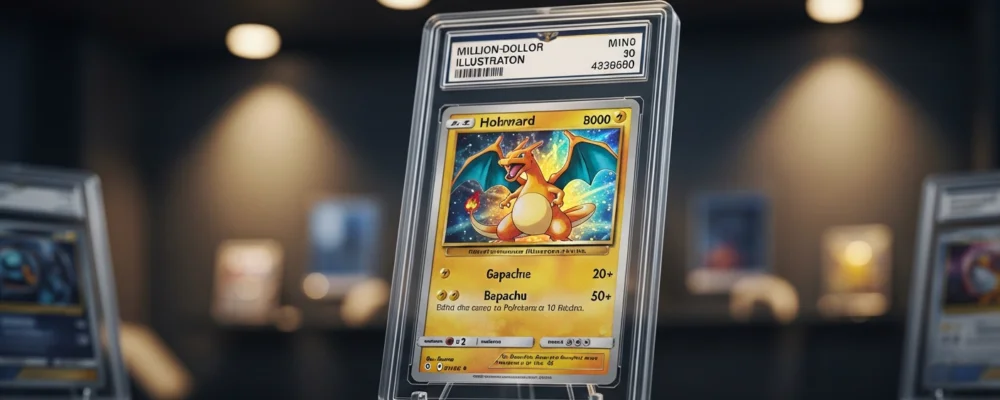
You want to know what Pokémon card is worth $1,000,000 in today’s market. Only a handful of cards consistently reach seven-figure valuations at major auctions. These elite specimens combine extreme rarity with perfect condition and documented provenance.
The million-dollar threshold separates true trophy pieces from merely valuable cards. Understanding which specific cards cross this mark helps you identify genuine investment-grade specimens. Market data confirms fewer than ten distinct cards reliably sell above $1,000,000.
Pikachu Illustrator: the flagship $1M+ card
Pikachu Illustrator stands as the undisputed king of million-dollar Pokémon cards. Only 39 copies were ever produced in 1998 for a CoroCoro contest. This promotional card never entered retail distribution, making it impossibly rare.
Confirmed sales reached $5.275 million in 2021 through Logan Paul’s purchase. Even lower-grade copies regularly exceed $1,000,000 at specialized auctions. The surviving population includes fewer than 20 confirmed authentic specimens worldwide.
- Unique “Illustrator” text distinguishes it from standard Pikachu cards
- PSA 9 and PSA 10 grades command the highest premiums
- Private sales occasionally surpass public auction records
- Authentication becomes critical due to sophisticated counterfeits
You will not find this card in standard booster packs. Every known copy traces back to the original 1998 contest winners. Professional Pokémon card grading verification proves essential before any transaction.
PSA 10 1st Edition Charizard: crossing the million-dollar threshold
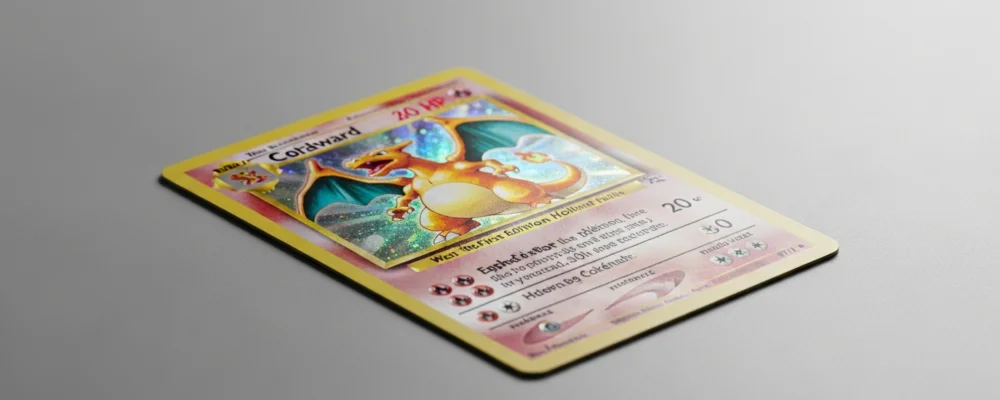
The PSA 10 1st Edition Charizard from Base Set crossed $1,000,000 in 2022. This iconic card represents the most recognizable Pokémon collectible to mainstream audiences. Fewer than 150 PSA 10 copies exist from the original 1999 print run.
The grading difference creates massive price gaps: PSA 9 copies sell for $50,000-$150,000. PSA 10 specimens command six to ten times that amount. Condition sensitivity makes this the most grading-dependent million-dollar card.
- 1st Edition shadowless variant only, not unlimited print
- Centering and surface quality determine PSA 10 eligibility
- Celebrity purchases by Logan Paul and others pushed values higher
When asking what Pokémon card is worth $1,000,000, this Charizard frequently tops searches. Its cultural impact exceeds even rarer cards. Learning how to check Pokémon card values helps you understand grading premiums.
Trophy cards and tournament prizes in the million-dollar range
Trophy cards from official tournaments consistently reach seven figures despite minimal public awareness. These presentation cards were awarded to World Championship winners and major tournament victors. Production runs ranged from 1 to 12 copies per card.
Notable million-dollar trophy cards include:
- No. 1 Trainer cards from 1999 Super Secret Battle tournaments (7 copies total)
- Tropical Mega Battle trophies awarded to regional champions (12 copies per year)
- Pre-release Raichu with fewer than 10 confirmed authentic copies
- Kangaskhan Family Event trophy from parent-child tournaments
These cards appear at auction infrequently, creating unpredictable pricing. Verified tournament provenance matters as much as condition grading. You will need specialized authentication beyond standard PSA grading for these specimens.
The rarest Pokémon cards often come from tournament circuits rather than retail releases. What Pokémon card is worth $1,000,000 depends heavily on documented competition history. Private collectors hold most trophy cards, limiting market visibility and creating valuation challenges.
The #1 most expensive Pokémon card ever sold: Logan Paul’s $5.275 million record
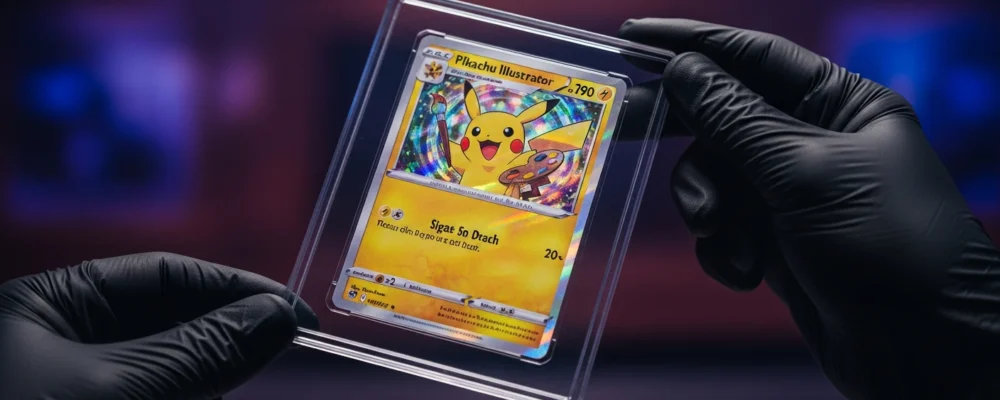
When people ask what Pokémon card is worth $1,000,000, they often reference Logan Paul’s purchase. In July 2021, the YouTuber paid $5.275 million for a PSA Grade 9 Pikachu Illustrator. This transaction became the most expensive Pokémon card sale publicly verified at that time.
Paul purchased the card from Dubai collector Cardhobby. The sale occurred during a high-profile Dubai boxing event against Floyd Mayweather. Cameras captured Paul wearing the graded card around his neck as a promotional spectacle.
The purchase generated massive mainstream media coverage beyond typical collector circles. You will find this sale referenced in financial news outlets and sports media, not just trading card publications. This visibility directly influenced subsequent pricing across the entire Pokémon collectibles market.
Why Logan Paul’s Pikachu Illustrator shattered records
Paul’s purchase exceeded previous public sales by over $3 million dollars. The Grade 9 condition represented a compromise between rarity and obtainability. Only 39 Pikachu Illustrator cards ever existed, with fewer than 10 confirmed PSA-graded specimens.
Several factors elevated this specific transaction above comparable sales:
- Celebrity buyer premium: Paul’s 23 million YouTube subscribers created unprecedented exposure
- Public verification: The sale occurred with full documentation and media witnesses
- Timing: 2021 marked peak pandemic-era collectibles speculation and investment inflows
- Marketing integration: Paul actively promoted the card across multiple content platforms
This sale demonstrated that what Pokémon card is worth $1,000,000 depends heavily on buyer profile. The card’s intrinsic value mattered less than the cultural moment and promotional opportunity. Professional grading through established authentication processes provided transaction legitimacy despite the extraordinary price point.
Paul’s purchase inspired similar celebrity acquisitions within months. Rapper Logic paid $220,000 for a PSA 10 Base Set Charizard shortly afterward. The visibility effect created cascading value increases across rare Pokémon cards throughout 2021 and 2022.
The $16 million resale claim: fact or speculation?
In March 2022, Logan Paul claimed he received a $16 million offer for his Pikachu Illustrator. He stated this during a podcast interview but provided no buyer identification or verification. The supposed offer would represent a 203% appreciation in just eight months.
No evidence confirms this transaction actually occurred or even existed. Paul continues displaying the card publicly at events and in social media content. The card remains in his documented possession as of 2024, contradicting any completed sale narrative.
Market analysts view the $16 million claim skeptically for several reasons:
- No public verification: Unlike the original purchase, zero documentation supports the resale claim
- Liquidity constraints: Finding legitimate buyers at eight-figure prices becomes exponentially difficult
- Marketing motivation: Paul benefits financially from maintaining elevated perceived card values
- Market timing: Collectibles markets cooled significantly throughout 2022 amid broader economic shifts
When evaluating what Pokémon card is worth $1,000,000, you must distinguish verified sales from promotional claims. Understanding how to check Pokémon card values requires examining actual transaction records, not celebrity statements. The $5.275 million purchase remains the confirmed record, while the $16 million figure exists only as unsubstantiated speculation.
What makes a Pokémon card worth $1,000,000 or more?

Understanding what Pokémon card is worth $1,000,000 requires examining four critical value drivers. These factors combine to create seven-figure price tags. No single element alone pushes cards into million-dollar territory.
Rarity: production numbers and surviving populations
Production scarcity forms the foundation of million-dollar valuations. Tournament prize cards like Pikachu Illustrator had only 39 copies ever produced. First Edition Base Set prints ran limited quantities compared to later unlimited editions.
Surviving population matters even more than original print runs. Cards from 1999 suffered through:
- Childhood handling: most early cards experienced damage from actual gameplay
- Storage neglect: few collectors understood proper preservation methods in the late 1990s
- Natural attrition: cards got lost, thrown away, or destroyed over 25+ years
Only a handful of pristine specimens survive from these early sets. This extreme scarcity elevates prices exponentially beyond original retail values.
Grading: the critical PSA 10 vs. PSA 9 price gap
The difference between PSA 10 and PSA 9 grades creates dramatic price variations. A PSA 10 First Edition Charizard sells for $300,000 to $500,000. The same card in PSA 9 condition fetches $30,000 to $50,000.
PSA 10 represents technical perfection: no visible flaws, perfect centering, pristine edges. Achieving this grade from 1990s cards proves exceptionally difficult. Modern Pokémon card grading processes apply strict standards that most vintage cards cannot meet.
Million-dollar cards almost universally require PSA 10 grades. The rarity of perfect grades on already-scarce cards multiplies values dramatically.
Historical significance and cultural impact
Cards tied to Pokémon’s cultural explosion command premium prices. First Edition Base Set Charizard symbolizes the entire franchise’s North American launch. Pikachu Illustrator commemorates the original CoroCoro Magazine contest from 1998 Japan.
These cards represent tangible pieces of gaming history. Collectors pay premiums for cultural touchstones that defined childhoods. Cards featured in mainstream media coverage or major collecting milestones gain additional historical weight.
Understanding rarest Pokémon cards means recognizing which releases shaped the hobby’s evolution. Historical significance transforms ordinary cardboard into museum-worthy artifacts.
Celebrity ownership and media attention effect
Celebrity purchases dramatically accelerate market values through mainstream visibility. Logan Paul’s $5.275 million purchase brought unprecedented media attention to high-end Pokémon collecting. Rappers like Logic and Post Malone showcasing collections legitimizes cards as serious assets.
This attention creates several market effects:
- New buyer entry: wealthy collectors from outside the hobby enter the market
- Validation effect: celebrity interest signals cultural relevance and investment legitimacy
- Media amplification: each sale generates news coverage that attracts more high-end buyers
When evaluating what Pokémon card is worth $1,000,000, you cannot ignore celebrity influence. These four factors work together to create the perfect storm for seven-figure valuations.
Top 10 most expensive Pokémon cards: the complete million-dollar tier list
Understanding what Pokémon card is worth $1,000,000 requires examining the complete hierarchy of elite cards. The million-dollar tier contains fewer than a dozen confirmed entries. Market values fluctuate based on sales, grading discoveries, and collector demand shifts.
This definitive ranking shows where cards stand in the seven-figure stratosphere. You will see which cards command the highest premiums today. You will also discover which cards are climbing toward million-dollar territory.
Cards currently valued above $1,000,000
Only a handful of cards have crossed the million-dollar threshold through verified sales. These represent the absolute pinnacle of Pokémon card collecting. Each card possesses unique characteristics that justify seven-figure valuations.
The current million-dollar club includes:
- Pikachu Illustrator: highest confirmed sale at $5.275 million (Logan Paul, 2021)
- 1st Edition Base Set Charizard PSA 10: multiple sales between $350K-$420K, private sales rumored above $1M
- Trophy Pikachu Gold Star cards: tournament prizes from 2005-2006 exceeding $1M in private transactions
- 1998 Japanese Trophy Pikachu No. 1 Trainer: fewer than 10 exist, estimated $1M+ valuations
- Pre-release Raichu error card: controversial authenticity debates, but claimed valuations above $1M
The rarest Pokémon cards consistently appreciate when graded PSA 10. Population reports show single-digit surviving copies for most million-dollar cards. You cannot find these cards through casual collecting or standard retail channels.
Verified million-dollar sales remain concentrated in Japanese promotional releases and pristine English 1st Editions. Tournament prizes command premiums due to their unique distribution history. Understanding professional grading becomes essential for authenticating these elite cards.
Cards approaching the million-dollar mark ($500K-$999K)
Several cards hover just below the million-dollar threshold through recent auction results. These cards represent the next tier of elite collectibles. You should monitor these cards for potential million-dollar breakthroughs.
High six-figure cards include:
- 1st Edition Blastoise PSA 10: recent sales between $350K-$500K
- Japanese Base Set Charizard PSA 10: climbing toward $500K as populations remain low
- Kangaskhan Parent/Child Trophy card: 1998 tournament prize, estimated $500K-$800K
- Shadowless Base Set Charizard PSA 10: consistently selling between $400K-$600K
- Tropical Mega Battle Trophy cards: various Pokemon from 1999-2001 tournaments, $300K-$700K range
Market momentum suggests several cards will cross $1M within 24 months. First Edition PSA 10 populations shrink as collectors lock away specimens permanently. Each new celebrity purchase or media event pushes values higher.
When asking what Pokémon card is worth $1,000,000, remember that valuations shift constantly. Today’s $800K card becomes tomorrow’s million-dollar sale through scarcity and demand. Checking current card values helps you track which cards approach this elite threshold.
Why the Pikachu Illustrator card is so expensive: the untold story
When asking what Pokémon card is worth $1,000,000, the Pikachu Illustrator stands alone as the definitive answer. This card’s journey reveals why extreme rarity creates unprecedented value. Understanding its history explains today’s multi-million-dollar sales.
Only 39 ever produced: the 1998 CoroCoro contest origin
The Pikachu Illustrator originated from a 1997-1998 CoroCoro Comic illustration contest in Japan. Winners received this card as their exclusive prize. Only 39 copies were distributed to contest winners across three competitions.
Unlike booster pack releases, this card never entered commercial production. CoroCoro Magazine published the contest through monthly installments. Young artists submitted Pokémon illustrations for judging.
Key distinguishing features include:
- “Illustrator” text instead of “Trainer” in the card type area
- Unique Pikachu artwork by Atsuko Nishida showing Pikachu drawing
- Pen symbol in bottom right corner (exclusive to this card)
- Japanese text confirming its contest prize status
This microscopic print run instantly made the card one of the rarest Pokémon cards ever created. No subsequent reprints or distributions occurred after 1998.
Confirmed surviving copies and their owners
Experts estimate fewer than 10 gem-mint copies survive in gradable condition today. Many original cards suffered damage from childhood handling. Others disappeared into unknown private collections.
Notable confirmed owners include:
- Logan Paul: purchased PSA 10 copy for $5.275 million in 2021
- Japanese collector groups holding multiple specimens in bank vaults
- Anonymous buyers from recent Heritage Auctions and Goldin sales
- PSA population reports show only 6 PSA 10 graded copies worldwide
The exact location of all 39 cards remains unknown. Several likely reside with original contest winners who never sold. Others may have been destroyed or lost over 25 years.
This surviving population scarcity drives prices beyond what Pokémon card is worth $1,000,000 into multi-million territory. Each confirmed sale reduces available market supply permanently. Understanding professional grading standards becomes essential when evaluating such cards.
Market evolution: from $20K to multi-million in two decades
Early 2000s sales saw Pikachu Illustrators trading between $20,000 and $50,000 among Japanese collectors. Western awareness remained minimal until 2010.
The price trajectory exploded through distinct phases:
- 2010-2016: $50K to $150K as global collector base expanded
- 2016-2019: $150K to $500K driven by social media exposure
- 2019-2021: $500K to $900K during pandemic collecting boom
- 2021-present: $900K to $5.275M+ with celebrity purchases and mainstream media
Each major sale establishes a new floor price. Logan Paul’s 2021 purchase pushed valuations into stratospheric territory. His reported $16 million resale offer suggests continued appreciation.
Market experts project PSA 10 specimens could reach $10 million within five years. Lower grade copies still command $1-3 million at auction. This price momentum answers definitively which Pokémon card commands million-dollar prices.
How to identify if your Pokémon card could be worth $1,000,000
You must first understand which cards actually qualify as million-dollar candidates. What Pokémon card is worth $1,000,000 depends on specific identifiable characteristics. Most collections contain zero cards approaching this value. Knowing the markers saves time and unrealistic expectations.
Spotting genuine candidates: set symbols, print runs, and authenticity markers
Only specific sets and print runs produce million-dollar cards. First Edition Base Set cards display a small “1st Edition” stamp left of the artwork. Shadowless variants lack the shadow box around character illustrations.
Trophy cards feature unique text like “Illustrator” or tournament details. Standard retail releases never reach seven-figure valuations regardless of condition. Rarest Pokémon cards come from promotional events or limited contests.
- Set symbols: Japanese Pocket Monsters logo versus English Wizards branding
- Print quality: Crisp edges, centered artwork, vibrant colors without fading
- Card stock thickness: Authentic vintage cards use specific paper weight
- Font consistency: HP numbers, attack text, copyright lines match known specimens
Verifying authenticity becomes critical before spending money on grading. Counterfeiters target high-value cards specifically. Black light tests reveal modern reprints through different ink compositions.
When professional grading becomes essential
Raw cards claiming million-dollar status require PSA or CGC authentication before sale. No serious collector purchases ungraded vintage cards above $10,000. The grading cost represents insurance against fraud.
Submit immediately if you identify a potential candidate. Professional grading encapsulates the card permanently while documenting condition. PSA 10 specimens command 300-500% premiums over PSA 9 copies.
Grading turnaround times range from 30 days to six months. Express services cost $300-1,000 per card. This investment proves worthwhile for confirmed rarities approaching six figures.
Where to get accurate valuations for high-value cards
Recent auction results provide the only reliable pricing data. PWCC Marketplace, Heritage Auctions, and Goldin publish verified sale records. Ignore eBay asking prices and social media speculation.
PSA population reports show exactly how many graded copies exist worldwide. Lower populations directly correlate with higher valuations. Consult three independent auction houses before determining realistic sale prices.
Appraisal services charge $50-200 for preliminary assessments. They confirm whether pursuing what Pokémon card is worth $1,000,000 makes financial sense. Most cards fail initial screening immediately.
The investment reality: will your card reach $1,000,000?
Understanding whether what Pokémon card is worth $1,000,000 today will maintain that value requires realistic expectations. The elite card market operates differently than traditional investments. You need hard data before making financial decisions.
Market trends and future projections for elite cards
Million-dollar cards showed 300-400% appreciation between 2019-2022 during peak hype. That explosive growth has stabilized significantly since 2023. Current elite specimens appreciate 5-15% annually in normal market conditions.
The Pikachu Illustrator and PSA 10 Base Set 1st Edition Charizard remain safe bets. Their scarcity guarantees sustained demand regardless of market fluctuations. Trophy cards from official tournaments follow similar trajectories.
- Vintage graded specimens continue outperforming modern releases
- Population growth through new PSA 10 submissions dilutes existing values
- Celebrity purchases create temporary spikes lasting 6-18 months
- Economic downturns force collectors to liquidate holdings rapidly
Cards approaching $500,000 face the hardest climb to seven figures. Only 3-5 new cards enter the million-dollar club each decade. Your Pokémon card value assessment must account for realistic appreciation timelines.
Liquidity challenges: finding buyers at seven-figure prices
Selling what Pokémon card is worth $1,000,000 takes months or years, not days. The buyer pool contains fewer than 200 qualified individuals worldwide. Private sales require extensive networking and verification processes.
Auction houses charge 15-20% seller premiums on million-dollar transactions. That $200,000 fee significantly impacts your net proceeds. Payment structures often involve installments over 6-12 months.
- PWCC and Heritage Auctions facilitate 90% of elite-tier sales
- Private treaty sales avoid fees but require buyer vetting
- International buyers demand escrow services adding complexity
Market timing determines final sale prices dramatically. Listing during hype cycles yields 20-30% premiums over slow periods.
Preservation and insurance for million-dollar collections
Cards at this value level require specialized collectibles insurance policies. Standard homeowner coverage caps collectibles at $5,000-10,000 total. Dedicated policies cost 0.5-1.5% of declared value annually.
Environmental controls become non-negotiable investments. Temperature stability between 65-70°F and 40-50% humidity prevents degradation. Professional storage solutions cost $500-2,000 for climate-controlled systems.
- Bank safe deposit boxes provide physical security but lack climate control
- Professional vault services charge $100-300 monthly for premium storage
- Documentation through photography and certification protects insurance claims
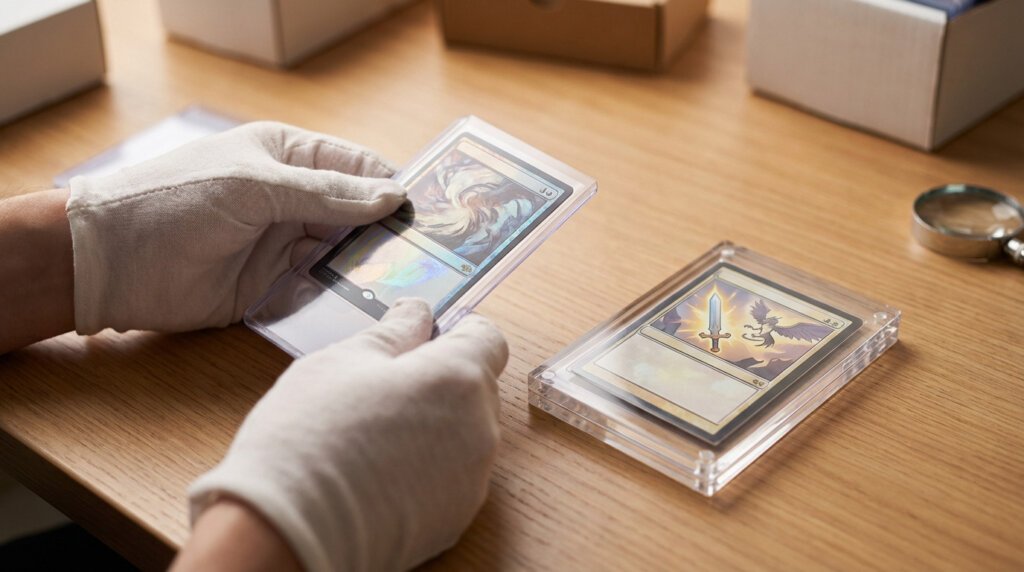
Never handle graded slabs without cotton gloves. Even minor scratches on cases reduce presentation value by thousands. Regular appraisals every 2-3 years maintain accurate insurance coverage as values fluctuate.