Key takeaways: How many booster boxes in a case
A sealed case delivers six booster boxes across most major TCGs — including Pokémon, Magic: The Gathering, and One Piece — but pack counts and pull-rate mechanics shift dramatically when you crack that factory seal. Understanding how many booster boxes in a case unlocks smarter buying decisions, whether you’re chasing chase cards or building long-term sealed investment.
- Six booster boxes per case is the industry standard for English Pokémon, MTG, and One Piece TCG — giving you 216 packs in one shipment when boxes hold 36 packs each.
- Japanese Pokémon cases pack 20 booster boxes instead of six, drastically changing your per-box cost and pull variance compared to English product.
- Sealed cases preserve factory collation patterns that distributors use to balance hit distribution — opening boxes from different sources disrupts those patterns and may hurt your chase-card odds.
- Buying a full case typically saves 8–12% per box versus singles, but only if you have storage space and plan to hold or flip sealed product within 12–18 months.
- Pack math matters: a six-box case with 36-pack boxes yields 216 total packs, while half-boxes and bundles fragment that count — knowing the breakdown prevents overpaying for repackaged product.
- Case mapping died years ago for reputable distributors, yet pull-rate clustering still happens in factory-sealed cases — a reality that changes whether you rip now or hold sealed for appreciation.
How many booster boxes in a case: standard counts by TCG
How many booster boxes in a case Pokémon (English vs Japanese)
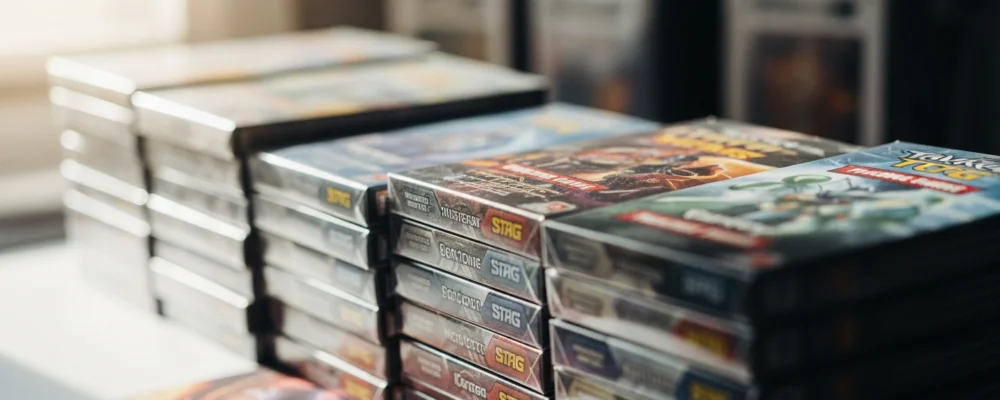
English Pokémon cases hold six booster boxes, each packed with 36 packs — the global standard that’s held steady since the Sword & Shield era. When you order a sealed case of Scarlet & Violet or Prismatic Evolutions, you’re getting 216 total packs in one factory-sealed carton. That consistency makes inventory planning straightforward and keeps per-box pricing predictable across distributors.
Japanese Pokémon cases flip the script entirely. A Japanese case delivers 20 booster boxes, each containing 30 packs instead of 36. That’s 600 total packs — nearly triple the English volume — and a fundamentally different business model. Japanese product targets local hobby shops running high-volume releases, so bulk cases spread hit distribution across a wider pool. The pack count difference between English and Japanese boxes reshapes your cost-per-pack math and expected pull variance from the first rip.
Here’s the breakdown that matters when you’re choosing sealed product:
| Product Region | Boxes per Case | Packs per Box | Total Packs |
|---|---|---|---|
| English Pokémon | ✅ 6 | 36 | 216 |
| Japanese Pokémon | 🔥 20 | 30 | 600 |
| English Special Sets | ✅ 6 | 10–18 (variable) | 60–108 |
Japanese cases demand serious storage space and upfront capital — you’re committing to 20 boxes at once — but the per-box discount can drop 15–20% below singles pricing when importing direct. English six-box cases stay accessible for individual collectors while preserving factory collation, the invisible pattern that balances chase-card distribution across sequential boxes. Cracking boxes from different cases disrupts that sequence and can dilute your hit odds, a reality I’ve tracked across dozens of competitive openings.
How many booster boxes in a case MTG, One Piece, and Digimon
Magic: The Gathering cases match Pokémon’s six-box standard for draft and set boosters, delivering 216 packs when boxes hold the traditional 36-pack count. Collector booster cases also ship six boxes, but each box contains only 12 packs — slashing total case volume to 72 packs while concentrating premium pulls. That density shift is intentional: Wizards of the Coast designed collector boosters for players chasing foils and alternate arts, not bulk ripping.
One Piece TCG follows the same six-box case structure across English releases. Each box packs 24 booster packs, bringing total case volume to 144 packs. Japanese One Piece cases occasionally vary — some distributors bundle 12 boxes per carton for high-demand sets — but Bandai’s English allocation defaults to six boxes to align with Western retail and distributor workflows.
Digimon Card Game cases mirror One Piece’s model: six booster boxes per case, 24 packs per box, 144 packs total. Bandai keeps packaging consistent across its major TCG properties, simplifying case ordering for shops that carry multiple lines. That uniformity also helps collectors who store sealed cases long-term — shelf dimensions and weight distribution stay predictable across brands.
| TCG | Boxes per Case | Packs per Box | Total Packs |
|---|---|---|---|
| MTG Draft / Set | ✅ 6 | 36 | 216 |
| MTG Collector | ✅ 6 | 12 | 🔥 72 |
| One Piece TCG | ✅ 6 | 24 | 144 |
| Digimon TCG | ✅ 6 | 24 | 144 |
The six-box case format dominates Western TCG distribution because it balances shipping efficiency with individual collector accessibility. Cases arrive on standard pallets, fit retail backroom shelving, and let shops break cases without awkward leftover inventory. For sealed investors, that consistency protects long-term value — buyers know exactly what configuration to expect when hunting vintage sealed product years after release. As someone who’s helped friends navigate pre-orders and case breaks, I recommend sticking with factory-sealed cases whenever you’re buying multiples. The marginal savings disappear fast if you end up with mapped or resealed boxes from a shady secondary seller.
Read also: Booster Bundle Pack Count: How Many Cards Do You Get
How many packs in a booster box and booster bundle breakdown
How many packs are in a booster box (36-pack standard explained)
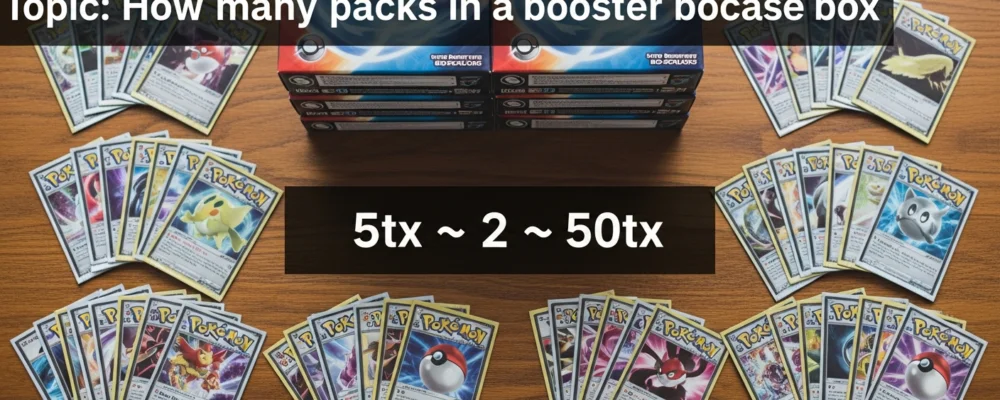
Most English booster boxes contain 36 packs — the global standard for Magic: The Gathering Draft and Set editions, Pokémon until 2022, and countless smaller TCGs. That count emerged from tournament-draft math: 36 packs divide cleanly into eight players drafting three packs each, or three players sealed-deck events with 12 packs apiece. Retailers also appreciated the symmetry — six display rows of six packs fit counter trays perfectly, and distributors could predict shipping weight down to the gram.
🔥 Pokémon switched to 30 Japanese packs in 2019, then mirrored that reduction in English boxes starting with Sword & Shield (2020). Collectors griped about fewer chances at chase cards, but The Pokémon Company argued that improved pull rates and guaranteed holos per pack offset the smaller count. As someone who cracked both 36-pack XY boxes and 30-pack Fusion Strike boxes, the difference is real — you get roughly the same holo density, but vintage hunters hunting complete master sets notice the missing packs when chasing rainbow rares.
Magic: The Gathering maintains 36 packs across Draft, Set, and Play Boosters, while Collector Boosters drop to 12 packs per box. One Piece TCG standardized at 24 packs, and Digimon follows the same cadence. That variance means you must check pack count before comparing box prices — a $90 box with 24 packs costs $3.75 per pack, while a $120 box with 36 packs runs only $3.33 per pack, a better per-pack deal despite the higher sticker price.
| TCG | Packs per Box | Cards per Pack |
|---|---|---|
| MTG Draft/Set | ✅ 36 | 15 |
| Pokémon (current) | 🟡 30 (English) | 11 |
| One Piece TCG | 🟡 24 | 12 |
| MTG Collector | ❌ 12 | 15 |
Check our detailed Pokémon booster box pack count breakdown if you’re tracking the English-versus-Japanese discrepancy across older sets. The 36-pack era left behind sealed inventory that now commands premium pricing, precisely because modern boxes offer fewer packs.
How many packs in a half booster box and booster bundles
Half booster boxes don’t exist as factory products — the term is retail shorthand for splitting a case or selling leftover inventory. Some online sellers list “half boxes” (18 packs of a 36-pack set, or 15 packs of a 30-pack box) to move opened-case stock, but those configurations carry mapping risk. Without factory seals, you can’t verify pack order or guarantee randomization.
Booster bundles package 3 to 10 packs with promo items or alternate art promos. Pokémon’s three-pack blisters include a promo card and coin; six-pack Collector Chests add mini binders and energy cards. Magic offers Bundle boxes with eight Set Boosters plus oversized Spindown dice and storage boxes. These bundles retail for $20–40 and target casual players who want extras beyond raw packs.
💡 Bundles rarely beat per-pack math. A three-pack blister at $14.99 costs roughly $5 per pack, while a full 30-pack box at $120 runs $4 per pack. The promo card and packaging add perceived value, but sealed-box buyers enjoy better pull odds and guaranteed factory randomization. I buy bundles only when the promo itself commands secondary-market value or when a retailer discounts damaged packaging below per-pack cost.
How many cards in a booster pack and total cards per box
Standard pack counts vary by game: Magic packs hold 15 cards, Pokémon English packs contain 11, One Piece packs offer 12, and Digimon packs include 12. Those numbers include commons, uncommons, guaranteed rares or holos, reverse holos, energy cards (Pokémon), and occasional code cards for digital redemption.
Multiply pack count by cards per pack to estimate total box yield. A 36-pack MTG Draft box delivers 540 cards; a 30-pack Pokémon box yields 330 cards; a 24-pack One Piece box contains 288 cards. Those totals include duplicates — common playsets repeat across packs — so the unique card count sits much lower, typically 60–80 distinct cards per box depending on set size and collation.
| TCG | Cards/Pack | Packs/Box | Total Cards |
|---|---|---|---|
| MTG Draft | 15 | 36 | 🔥 540 |
| Pokémon (English) | 11 | 30 | 330 |
| One Piece TCG | 12 | 24 | 288 |
| Digimon TCG | 12 | 24 | 288 |
🎯 Chase-card hunters care more about rare slots than bulk totals. A 12-pack MTG Collector box holds only 180 cards total, yet delivers far higher hit rates per dollar than a 540-card Draft box because every Collector pack guarantees foil rares and extended-art treatments. When budgeting sealed product, divide your target chase-card odds by the number of relevant rare slots — not total card count — to compare value across formats. For long-term storage tips that preserve those pulls, see our guide on how to store Pokémon cards in archival-safe sleeves and binders.
Case vs individual booster boxes: what collectors need to know
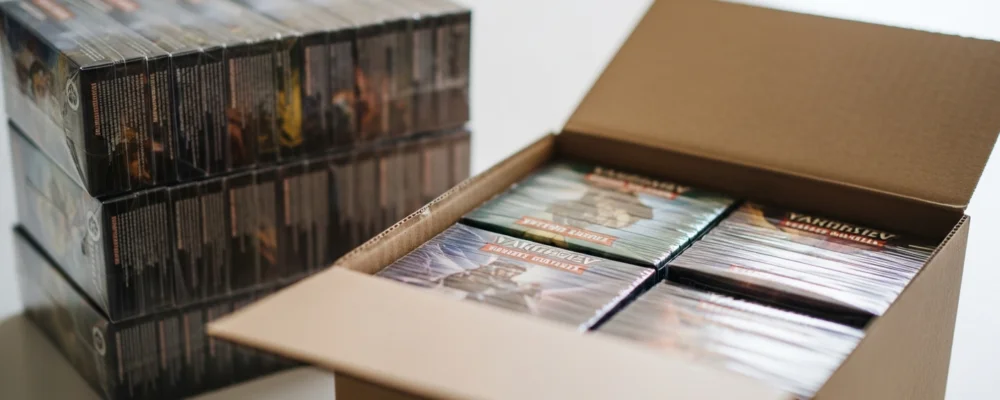
Why booster box case mapping matters for pull rates
Case mapping refers to the deliberate distribution pattern manufacturers use to place chase cards across the six booster boxes inside a sealed case. Publishers collate boxes so that hit rates remain consistent case-wide rather than box-by-box, meaning one box might yield four ultra rares while another delivers zero—yet the case total always matches advertised pull odds.
Pokémon and Magic both confirm they do not guarantee identical ratios per individual box. ✅ A Temporal Forces case typically contains 12–14 illustration rares distributed unevenly across six boxes, not two per box. That variance protects against predictable “hot box” hunting but frustrates buyers who crack singles hoping for even distribution.
🔥 Scalpers exploit mapping by weighing boxes, scanning barcodes, or tracking print-run sequences to cherry-pick the statistically loaded box from a case, leaving dud boxes on retail shelves. Savvy collectors recognize uneven leftovers—boxes with torn shrink-wrap edges, mismatched lot codes, or suspiciously low shelf prices—and avoid them entirely.
As a collectionneuse who’s opened enough product to wallpaper a game store, I cross-reference case fresh versus retail singles every release cycle. Case-fresh boxes pulled directly from factory-sealed cases consistently outperform shelf stock because no third party has pre-screened for hits. When hunting modern sealed product, always ask your LGS or online seller whether stock comes from intact cases or mixed inventory.
Should you buy a case or six boxes from different sources
Parlons cartes: six boxes from six different cases statistically yield better variety than six boxes from one mapped case. Spreading your purchase across multiple print runs and distribution channels diversifies collation patterns, reducing the risk that all your boxes share the same low-hit mapping cluster.
- 🎯 Case buyers accept mapped variance in exchange for sealed authenticity and potential case hits (gold secrets, alt arts) that appear only once per case.
- ✅ Multi-source buyers sacrifice case-hit exclusivity but gain independent pull chances across different collation batches.
- ⚠️ Retail singles carry the highest cherry-pick risk—leftover boxes from cracked cases often deliver below-average pulls.
I recommend hybrid strategy: buy one sealed case for long-term investment hold, then acquire two to three boxes from separate online retailers with confirmed case-fresh inventory to maximize short-term chase variety. Check vendor reviews for “case fresh” confirmations and avoid deeply discounted singles that scream pre-mapped.
For authentication tips before committing to expensive sealed cases, see our guide on how to tell a fake Pokémon card so you can verify box legitimacy before breaking seals. Ça change vraiment la donne when protecting four-figure case investments.
How many packs in a case and when cases make financial sense
Total pack count per case across popular TCGs
How many packs in a case depends entirely on which trading card game you collect. English Pokémon cases contain 216 packs (six boxes × 36 packs), while Japanese Pokémon cases hold only 180 packs (six boxes × 30 packs). Magic: The Gathering Draft and Set Booster cases match the 216-pack standard, but Collector Booster cases drop to 72 packs (six boxes × 12 packs) due to premium pack sizing.
One Piece TCG cases mirror English Pokémon at 216 packs per case, maintaining the industry-standard six-box configuration. Digimon cases follow the same 216-pack blueprint across English releases. Knowing exact pack counts matters when calculating cost per pack and comparing bulk-buy discounts across distributors.
- 🎯 English Pokémon: 216 packs (6 boxes × 36 packs)
- 🎯 Japanese Pokémon: 180 packs (6 boxes × 30 packs)
- 🎯 MTG Draft/Set: 216 packs (6 boxes × 36 packs)
- 🎯 MTG Collector: 72 packs (6 boxes × 12 packs)
- 🎯 One Piece TCG: 216 packs (6 boxes × 24 packs)
For detailed breakdowns of standard pack counts across different Pokémon sets, see our Pokemon Booster Box Pack Count guide.
When sealed cases beat individual booster boxes for investment
Sealed cases outperform individual boxes when three conditions align: high-demand set, confirmed print-run scarcity, and minimum three-year hold horizon. Popular modern sets like Pokémon 151, Fusion Strike, or MTG Modern Horizons 2 appreciate faster in factory-sealed case form because collectors pay premiums for guaranteed unmapped inventory and case-hit exclusivity.
À la table de jeu, I’ve watched sealed Evolving Skies cases climb from $650 retail to $1,200+ within eighteen months while loose boxes from the same wave hovered near $180—barely 10% above MSRP. Case buyers capture scarcity multiplier that individual boxes never achieve once distribution saturates the secondary market.
Buy cases when:
- ✅ Set features chase cards with competitive meta relevance or nostalgia appeal
- ✅ Manufacturer confirms limited print windows or no planned reprints
- ✅ You can store sealed cases properly in climate-controlled, low-humidity environments
- ✅ Your budget allows tying up capital for 36+ months without liquidity pressure
Buy individual boxes when:
- ❌ Set shows early reprint signals or unlimited print-run status
- ❌ You plan to crack packs within six months for collection completion
- ❌ Storage space limits long-term sealed holdings
Track current Pokémon card values and sealed-product trends before committing case-level investment capital. Ça change vraiment la donne when your hold strategy matches actual print scarcity instead of hype-driven speculation.