Key takeaways
Hockey length rules cover everything from your stick size to how long a game actually runs — and getting them wrong can cost you performance, penalties, or both.
- Stick length directly affects your game: a stick cut to the wrong height reduces shot power and puck control — the complete size chart below matches every player height to the right range.
- NHL rules cap stick length at 63 inches (160 cm) from heel to end of shaft — knowing this limit before a game prevents a costly equipment violation.
- Ice hockey runs exactly 60 minutes of regulation play across three 20-minute periods, but real-time duration with stoppages typically reaches 2.5 hours.
- Field hockey and ice hockey use different formats: confusing them leads to real surprises on game day — the comparison section breaks both down clearly.
- Defenders and forwards need different stick lengths for legitimate tactical reasons — not just preference — and the position guide explains exactly why.
- 🎯 The most overlooked insight in this article: how referees actually enforce blade length rules at the table — and the one measurement most recreational players never check.
Hockey Stick Length by Height: the Complete Size Chart
Getting your hockey stick length right is one of the highest-leverage equipment decisions you can make. The wrong size quietly kills your wrist shot and forces awkward skating posture — most players don’t even notice until they try the correct length.
Junior, Intermediate and Senior Hockey Stick Length Ranges
Stick sizing splits into three main categories based on player age, height and strength. Each category covers a specific range, and crossing the wrong boundary is a common mistake among growing players.
According to the Hockey Stick Size Guide from Net World Sports, player height is the single most reliable indicator for choosing the right stick length — not age alone. Here is the complete size chart:
| Category | Player Height | Stick Length | Typical Age | Best For |
|---|---|---|---|---|
| Mini / Twig | Under 4’0″ (122 cm) | 46–49 in (117–124 cm) | Under 7 | ✅ First-time players |
| Junior | 4’0″–4’8″ (122–142 cm) | 50–54 in (127–137 cm) | 7–12 | ✅ Youth leagues |
| Intermediate | 4’8″–5’5″ (142–165 cm) | 54–57 in (137–145 cm) | 12–17 | 🟡 Transition players |
| Senior | 5’5″–6’2″+ (165–188 cm+) | 57–63 in (145–160 cm) | 16+ | ✅ Adult / competitive |
The intermediate range is the most misunderstood. Many teen players jump straight to senior flex and length before their technique can handle it — and it slows their development noticeably.
How to Measure Hockey Stick Length on and off Skates
Here is the counterintuitive part: the correct measurement changes depending on whether you have skates on. Skates add roughly 1 to 1.5 inches of height, which shifts your ideal stick length by the same margin.
Two reliable methods exist. Use the one that matches your situation:
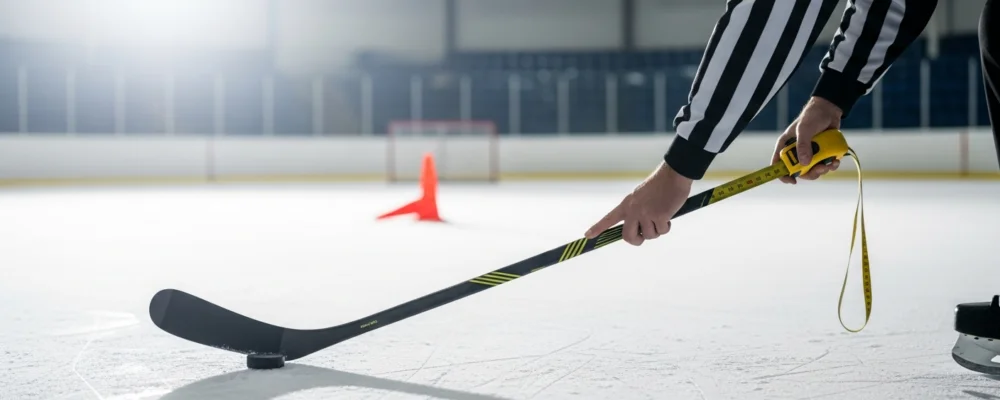
- Off-skates method: stand the stick blade-down on a flat surface. The shaft tip should reach between your chin and nose. This is the standard starting point for most players.
- On-skates method: with skates on, the shaft tip should reach between your chin and collarbone. This is the true in-game measurement.
Hockey Store’s guide on stick length and playing style notes that forwards often prefer a slightly shorter stick for tighter puck control, while defenders lean toward the upper end of their range for reach. 💡 Always measure on skates if you plan to cut the shaft — cutting off-skates is the most common sizing mistake recreational players make.
Hockey Games Length: How Long Does a Hockey Match Last?
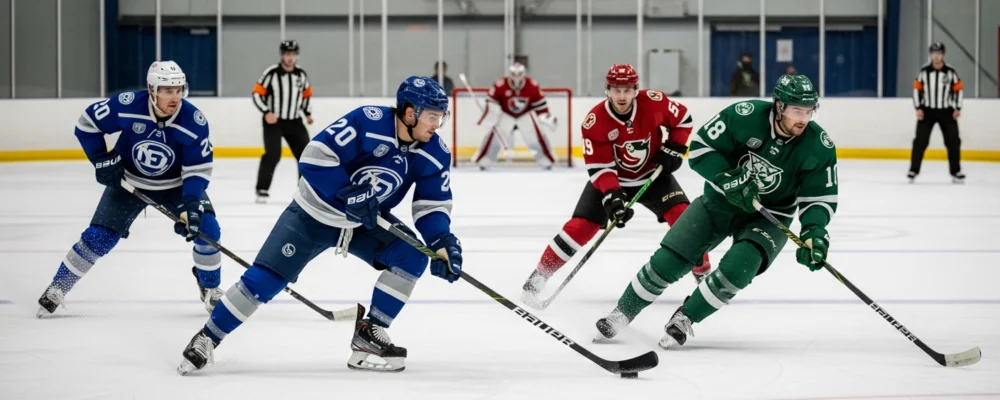
Game length in hockey is one of the most misunderstood topics — especially when you cross disciplines. Ice hockey, field hockey, and recreational formats each follow different structures. Let’s break it down clearly.
Is Hockey 3 Periods or 4? Ice Hockey vs Field Hockey Format
Ice hockey uses 3 periods. Each period lasts 20 minutes of stop-clock playing time. The clock pauses for stoppages, penalties, and icings, which is why a 60-minute game takes close to 2.5 hours in real time.
Field hockey uses 4 quarters of 15 minutes each. The FIH adopted this format to bring the sport in line with other major team sports and improve broadcast appeal. The change made field hockey feel noticeably faster and more TV-friendly.
Here is a direct comparison of both formats:
| Format | Structure | Playing Time | Clock Type | Overtime Rule |
|---|---|---|---|---|
| NHL / Ice Hockey | 3 × 20 min periods | 60 min | Stop-clock | 🟡 5 min OT + shootout |
| Field Hockey (FIH) | 4 × 15 min quarters | 60 min | Stop-clock | 🟡 Shootout format |
| Recreational Ice Hockey | 3 × 15–17 min periods | 45–51 min | Running clock | ❌ Usually none |
Recreational leagues almost always use a running clock to keep rink time on schedule. That is the biggest practical difference you will feel as a weekend player versus a competitive one.
Is Hockey 60 or 70 Minutes? Total Playing Time Explained
Both ice hockey and field hockey land at 60 minutes of pure playing time. The confusion around “70 minutes” typically comes from older field hockey formats or informal league adaptations.
Total elapsed time is a different story. For a full breakdown of how intermissions, penalties, and overtime stretch real game duration, this guide on hockey game duration from puck drop to final buzzer covers every scenario in detail. And if you want to understand how each period fits into the broader game structure, this hockey game time period explainer is worth bookmarking.
⚠️ One counterintuitive point: a regulation NHL game almost never finishes in under two hours in real time, despite 60 minutes on the clock. Stoppages accumulate fast, especially in playoff hockey where every whistle gets reviewed.
The bottom line is simple. 🎯 Both major hockey disciplines share the same 60 minutes of regulated play — just divided differently. Know the format before you show up to a tournament or set your schedule around a broadcast.
Hockey Length Rules: Official Limits for Sticks, Blades and Equipment
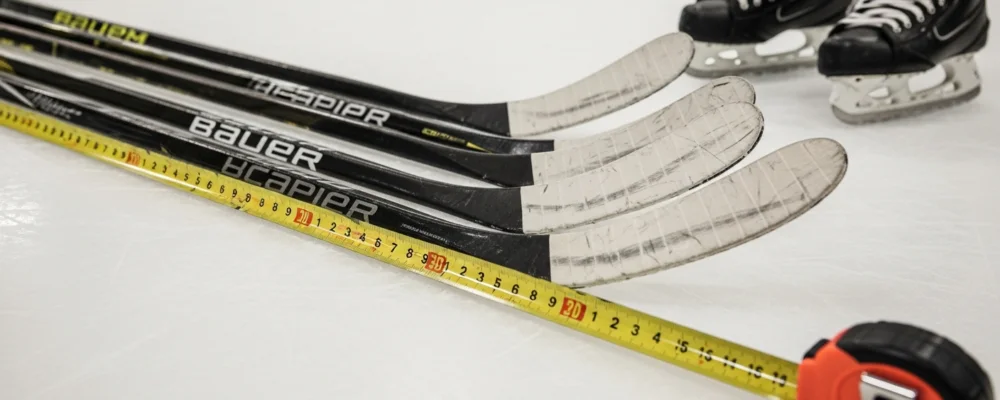
Rules exist for a reason. In hockey, stick dimensions are not suggestions — they are enforced limits that affect gameplay fairness, player safety, and tournament eligibility.
Maximum Hockey Stick Length Allowed by NHL, USA Hockey and FIH Rules
Each governing body sets its own ceiling, and the numbers vary more than most players expect.
- NHL rules cap total stick length at 63 inches (160 cm) from heel to end of shaft. Goalies are the exception, with a maximum of 26 inches for the shaft plus the paddle.
- USA Hockey follows the same 63-inch limit for skaters at all competitive levels, including youth divisions.
- 🎯 FIH (field hockey) takes a different approach: sticks must fit inside a 51-inch (130 cm) gauge, with no upper weight limit above 737 g.
One thing most players overlook: these limits apply to the stick as used on the ice or field, not the stock length from the store. Tape added to the butt end counts. A few extra wraps can technically push a borderline stick over the legal limit during a formal measurement.
Recreational leagues almost never enforce these rules strictly. But in sanctioned tournaments, a stick check can cost you a penalty — or worse, a disallowed goal. I have seen it happen at regional events, and it is an avoidable mistake.
Blade Length Rules and What Refs Actually Check at the Table
Blade dimensions are the more commonly checked spec at competitive play.
- NHL blade length: between 2 and 3 inches (5–7.6 cm) in width, and no longer than 12.5 inches (31.75 cm).
- ⚠️ Blade curvature (the “curve” or “hook”) is capped at ¾ inch (19 mm) in the NHL and USA Hockey. Refs use a flat gauge tool at the scorer’s table to verify this.
- In field hockey, the blade must have a smooth surface with no sharp edges, and the curve of the head is tightly regulated to prevent dangerous play.
What refs actually check during a formal measurement: curvature first, then overall length. Blade width is almost never disputed in practice, but curve violations are caught regularly, especially on custom sticks ordered online without proper spec verification.
💡 According to Hockeystore.com, playing style should guide your stick setup within these legal limits — not just position. That framing matters: a legal stick that does not suit your game is still the wrong stick.
Choosing the Right Hockey Length for Your Position and Playing Style
Stick length is not one-size-fits-all. The right hockey length depends on your position, your skating style, and honestly, how you handle the puck under pressure.
Shorter vs Longer Stick: Puck Handling, Reach and Shot Power Trade-offs
This is the core trade-off every player faces. A shorter stick sits closer to your body, giving you tighter puck control and faster hands in traffic. A longer stick extends your reach, adds leverage on slap shots, and helps you win puck battles along the boards.
The catch: you rarely get both at once. Going too long hurts your stickhandling speed. Going too short limits your defensive reach and shot power significantly.
- ✅ Shorter stick: better dekes, quicker release, more control in tight spaces
- ✅ Longer stick: stronger slap shot, better poke checks, easier board battles
- 🟡 Mid-length: the practical compromise most recreational players land on
According to Hockeystore.com, playing style should drive your stick length choice more than position alone. A shoot-first forward and a pass-first forward genuinely need different setups.
Position-Based Hockey Length Tips: Defender, Forward and Goalkeeper
Position creates tendencies, not rules. But these tendencies are strong enough to use as a starting point.
- Forwards generally benefit from a slightly shorter stick. Fast hands beat long reach when you are cycling in the offensive zone or driving the net.
- Defensemen lean toward a longer stick. Extra reach wins poke checks, clears rebounds, and neutralizes forwards at the blue line.
- 🎯 Goalkeepers (ice hockey) follow specific positional rules around paddle length, separate from skater stick specs entirely.
One nuance I always stress: your skating stance changes everything. A low, aggressive crouch shortens your effective reach naturally. Players who skate upright often need a slightly longer stick to compensate.
As noted in Net World Sports’ hockey stick size guide, measuring with your skates on is essential because skate height adds roughly 1 to 1.5 inches to your effective stance. That shift genuinely moves the ideal stick length by a full size category for some players.
Test before committing. Cut a stick conservatively, skate with it, then trim further if needed. You cannot add length back.
Frequently Asked Questions
What is the length of a hockey game?
A standard NHL hockey game lasts 60 minutes of regulation play, divided into three 20-minute periods. Including stoppages, intermissions, and potential overtime, the total real-time length of a hockey game typically runs between two and two and a half hours.
Is hockey 60 or 70 minutes?
Hockey is 60 minutes of regulation play, not 70. The game consists of three periods of 20 minutes each. The 60-minute standard applies to the NHL and most professional leagues worldwide as of 2026.
Is 5’9 short for hockey?
At the NHL level, 5’9″ is below the average player height of roughly 6’1″, so it is considered on the shorter side. However, many successful NHL players stand under 5’10” and compensate with speed, skill, and hockey sense.
Is hockey 3 periods or 4?
Hockey is played in 3 periods, each lasting 20 minutes. Unlike sports divided into quarters, the three-period structure is a defining feature of ice hockey at every level, from youth leagues to the NHL.