Key takeaways
A booster bundle looks like a bargain until you actually count the packs, and that gap between marketing name and real contents trips up a lot of buyers. Parlons cartes and clear up the confusion before you spend a dollar. 🎯
- Most booster bundles hold 6 packs, not a number tied to the set’s name, so never assume “151” or any theme means pack count.
- A booster box usually contains 36 packs, meaning a bundle gets you roughly a sixth of a full box’s pulls.
- Half a box means 18 packs, a common split among playgroups splitting costs for a draft night.
- Japanese boxes often pack more sleeves per box than English releases, which changes the math when comparing value across regions.
- Hit rates shift set to set, so a bundle from one release can outperform another with the same pack count.
- Bundle contents aren’t always shuffled the same way as box packs, a detail that affects your real odds at a chase card and that we break down further below.
Booster Bundle Pack Count: What's Actually Inside
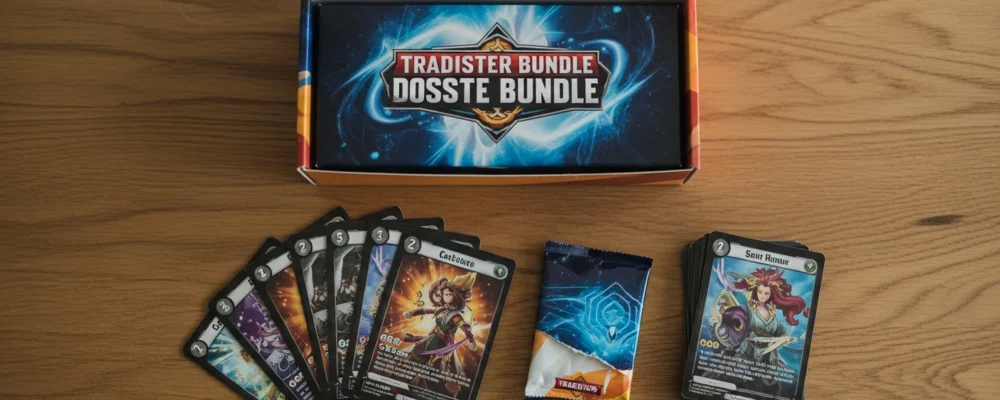
Let’s crack open what a booster bundle actually delivers, because the packaging rarely tells the full story. In most cases, a bundle holds 6 packs, full stop, regardless of what the set is called or how flashy the box art looks. ⚡
Cards per pack: commons, uncommons, and foils explained
Every English Pokémon booster pack follows a fixed formula. According to Pokémon’s official support page, each pack contains 10 cards: 4 commons, 3 uncommons, and 3 foil slots, with at least one guaranteed rare among those foils.
In a bundle of 6 packs, that means 60 cards total, with 18 guaranteed foils and at least 6 guaranteed rares. Not bad on paper. But as any collector who’s cracked a few bundles knows, “guaranteed rare” doesn’t mean guaranteed chase card. That distinction matters a lot once you start comparing value across sets.
| Pack Element | Quantity per Pack | Per 6-Pack Bundle |
|---|---|---|
| Commons | 4 | 24 |
| Uncommons | 3 | 18 |
| Foil slots (incl. rares) | 3 | 18 |
| Total cards | 10 | 60 |
Why the ‘151’ bundle doesn’t mean 151 packs
Here’s where a lot of new collectors get tripped up. The Scarlet & Violet 151 booster bundle references the number of Pokémon in the original Kanto Pokédex, not the pack count. According to Best Buy’s product listing, that bundle ships with exactly 6 packs, same as most other bundle releases.
In as a collector, I’ve seen this confusion play out constantly online: buyers expecting a mountain of packs because of a set’s name, then feeling shortchanged. Sans langue de bois, the name is marketing, not math. Always check the actual pack count printed on the box before assuming anything.
For context on how this compares to buying a full box, the complete breakdown of Pokémon booster box pack counts shows exactly how a bundle stacks up against a full 36-pack English box.
Booster Bundle vs Booster Box: Comparing Pack Totals
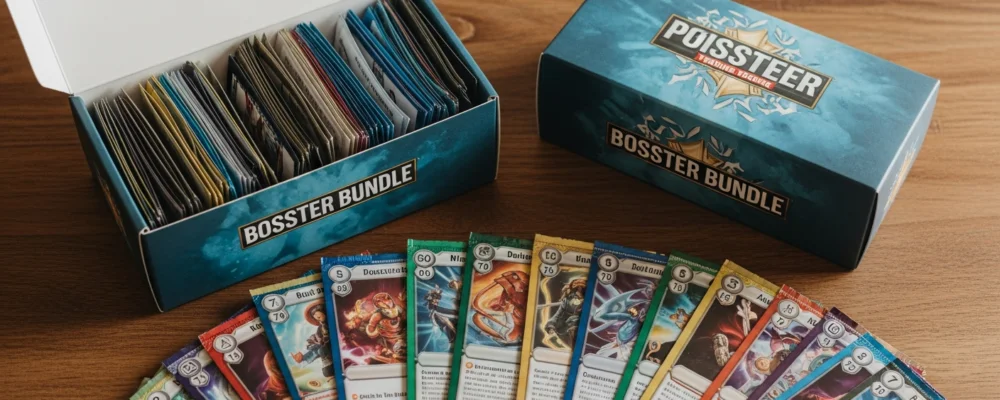
Let’s put the two side by side, because pack count is where bundles and boxes diverge the most. A booster bundle gives you 6 packs. A full English booster box gives you 36, six times more product for a proportionally lower per-pack price once you factor in typical retail discounts.
English vs Japanese box pack counts
This is where things get genuinely confusing for anyone comparing regions. An English booster box always contains 36 packs, but a Japanese booster box ships with anywhere from 20 to 30 packs depending on the set, according to Miraj Trading. Japanese packs also carry fewer cards each, typically 5 versus the 10 you get in an English pack.
In as a collector who’s opened both formats side by side, I can tell you the math doesn’t even out the way people expect. Fewer packs and fewer cards per pack means Japanese boxes concentrate hits differently, which changes how you should judge value per dollar.
| Format | Packs per Box | Cards per Pack |
|---|---|---|
| English booster box | 36 | 10 |
| Japanese booster box | 20 to 30 | 5 |
| English booster bundle | 6 | 10 |
Half a booster box: how many packs is that
Simple arithmetic, but people mess it up constantly. Half an English booster box is 18 packs, not 16, since 36 divided by 2 equals 18. That’s exactly three booster bundles stacked together, which makes bundles a handy modular unit if you’re trying to hit a specific pack count without committing to a full box.
Some retailers even market “half box” bundles built around this exact logic, bundling 3 six-pack sets to reach 18. For a deeper breakdown of how full boxes are structured across regions, the detailed guide on Pokémon booster box pack counts by region lays out every variation set by set.
Parlons cartes value: buying two bundles instead of half a box usually costs slightly more per pack, since boxes get better shelf discounts. But bundles win on flexibility if you just want a taste of a set without the full 36-pack investment. 🎯
🎯 Pull Rates and Value: Are Booster Bundles Worth It
Value comes down to one question: what’s your realistic hit rate per dollar spent. A booster bundle gives you fewer chances than a box, but the math per pack isn’t always worse, and sometimes it’s better.
Hit rate differences across recent sets
Numbers shift from set to set, and treating every bundle as identical is a rookie mistake. For the Destined Rivals bundles, the total pack pool across bundles reached 120 packs with a 39.2% hit rate, according to a pull-rate comparison video testing bundles against boxes side by side.
The same source found that Journey Together bundles pulled noticeably higher hit rates than their corresponding booster boxes. As a collector who’s opened plenty of both, I’d never assume set A behaves like set B just because they’re both “bundles.” Check pull data per set before buying blind.
Is bundle content truly random
Short answer: yes, but “random” doesn’t mean “even.” Each pack is sealed and shuffled independently, so there’s no hidden pattern letting you predict a rare from the box weight or pack position.
That said, discussion on r/TCG about booster bundle randomness raises a fair point: distribution centers sometimes ship bundles pulled from the same production run, which can cluster similar print sheets together. It’s not rigged, but it’s not a perfectly shuffled universe either.
- 🎯 Buying multiple bundles from different retailers spreads your print-run risk.
- 🎯 A single bundle is a small sample, so don’t judge a set’s value off one purchase.
- 🎯 Foil odds stay constant per pack, since each English pack guarantees at least one rare among its 3 foils.
In as someone who tracks pull rates across formats, my honest take: bundles are worth it if you want a controlled, lower-risk entry point. For raw chase-card odds at scale, a full box still wins, and the detailed pack count breakdown for booster boxes shows exactly why volume matters here. 🎯
Where to Buy Booster Bundles and What to Check First
Retail listings change fast, so I always check the Pokémon Center’s official booster pack catalog first before trusting a third-party seller’s description. Big-box retailers, hobby shops, and Pokémon Center itself all carry bundles, but the pack count and price per pack can vary between them even for the same set.
Before adding anything to your cart, run through this quick checklist:
- 💡 Confirm the exact pack count in the listing description, not just the set name (remember, “151” doesn’t mean 151 packs).
- 💡 Check whether the bundle includes a promo card or coin, since these extras affect resale value.
- 💡 Compare price per pack against a full booster box using our booster box pack count breakdown to see which format actually saves money.
- 💡 Look for sealed packaging with no shrink-wrap tears, since resealed bundles are a known scam pattern on marketplace listings.
- 💡 Buy from sellers with verifiable stock photos rather than generic stock images pulled from elsewhere online.
In as someone who’s been burned once by a “sealed” bundle that arrived with a suspiciously loose flap, my honest take is this: always photograph your unopened bundle before ripping into it. It protects you if a pack turns up short or damaged.
If you’re weighing a bigger purchase, it’s worth understanding how bundles fit into larger sealed formats, and our guide on how many booster boxes come in a case breaks down the next tier up for anyone scaling from bundles to bulk buying. 📌
Frequently Asked Questions
How many Pokémon cards do you get in a booster bundle?
A standard booster bundle contains 6 packs at 10 cards each, totaling 60 cards. That breaks down to 24 commons, 18 uncommons, and 18 foil slots, with at least 6 guaranteed rares across the whole bundle. 🎯
How many cards does a booster bundle hold?
A booster bundle holds 60 cards total, split across 6 sealed packs. Each pack follows the standard English formula of 4 commons, 3 uncommons, and 3 foil slots, meaning every pack guarantees at least one rare card.
How many booster bundles come in a booster bundle display?
Retailers don’t standardize display sizes the way they do individual bundles, so counts vary by set and store. What stays consistent is each bundle itself: 6 packs, 60 cards, regardless of how many bundles ship per display case.