Searching for Pokémon card shops near me is about more than finding the closest map pin. You may need a booster pack today, a specific single for a deck, a trustworthy graded card, or a place to trade and play. The best nearby option depends on what you want to buy, how soon you need it, and whether the store’s inventory is current.
Start with the closest shop that fits your purpose
Search Google Maps or another map service with your city, neighborhood, or ZIP code, then compare more than distance. A specialist card shop may be slightly farther away but save you a wasted trip if it carries singles, Japanese Pokémon cards, sealed products, or collector supplies. A local game store may be the better choice if you want Pokémon League play, prereleases, or a regular trading community.
Official Pokémon TCG Retailer Locator · Find stores and online retailers where you can buy Pokémon Trading Card Game products.
Before leaving, open the store profile and check its address, opening hours, phone number, recent reviews, and photos. Look for evidence that Pokémon TCG is a real part of the business rather than an occasional product line. Photos of display cases, binders, sealed boxes, play tables, and event posters can tell you more than a generic “trading cards” category.
Use the official retailer finder as a first check
The official Pokémon TCG retailer finder is a useful starting point when you want established retailers and local game stores. It does not replace a phone call. Product allocations, release-day limits, and restocks can change quickly, especially for popular Elite Trainer Boxes, booster bundles, and collection boxes.
Call with a precise question
Instead of asking, “Do you have Pokémon cards?” ask for the category you need: “Do you have sealed booster packs from the current set?”, “Do you buy and sell Pokémon singles?”, or “Do you have Japanese-language boxes?” If you are looking for one card, give the card name, set, card number, language, and whether you want a raw or graded copy. A precise question gets a useful answer faster.
Match the store type to the Pokémon cards you want
Nearby sellers do not all serve the same buyer. Knowing what each type does well makes it easier to choose between a specialist shop, a local game store, a major retailer, or an online order with local pickup.
| Where to shop | Usually best for | What to verify first |
|---|---|---|
| Specialist card shop | Singles, graded cards, sealed hobby products, Japanese imports, accessories | Condition standards, buylist policy, current inventory, authenticity process |
| Local game store | Sealed Pokémon TCG, decks, supplies, organized play, trade nights | Event calendar, play space, restock schedule, purchase limits |
| Major retailer | Convenient sealed products, binders, sleeves, pickup or delivery | Pickup availability, seller identity, return policy, product condition |
| Online seller with pickup | Fast price comparison and reserve-before-you-go convenience | Whether stock is held locally and ready for collection |
Sealed products, singles, and slabs are different purchases
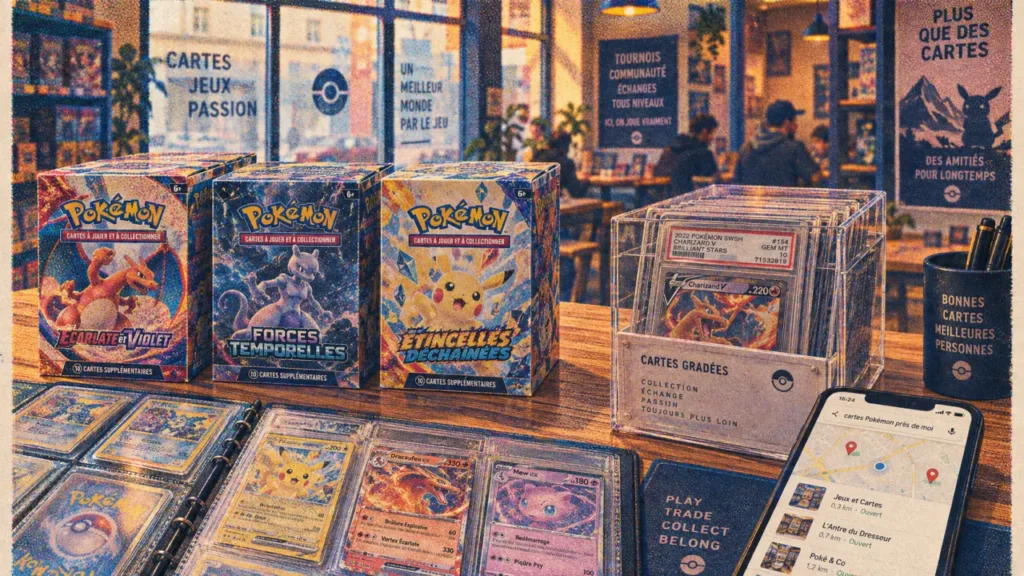
Sealed products include booster packs, booster bundles, Elite Trainer Boxes, tins, collection boxes, and decks. They suit players building a collection, gift buyers, and collectors who prefer unopened items. Singles let you buy the exact Pokémon card you need without relying on a pull. Graded cards, often sold in protective slabs, add another consideration: the grading company, grade, certification details, and the card’s market appeal all affect the purchase.
Japanese Pokémon cards deserve a separate question because not every local shop imports them. Ask whether the shop stocks Japanese sealed boxes, loose packs, singles, or only occasional trade-ins. Also confirm whether you are buying for collecting or tournament play. Language and event rules can affect what is practical for your deck.
Check stock without trusting a stale listing
Inventory is the most changeable part of any local card-shop search. A listing marked “in stock” may reflect an earlier delivery, a single remaining unit, or stock at a different branch. Treat website availability, marketplace listings, and map profiles as leads, not guarantees, until the store confirms the item.
Look for freshness signals
A strong store profile makes it easier to see whether products were recently updated, whether online inventory matches the physical shop, and whether pickup can be reserved. Stores that show an expected restock date, clearly label preorders, or distinguish “in store” from “warehouse” stock make buying decisions easier. If a product matters for a birthday, tournament, or release day, ask staff to hold it under your name when their policy allows.
A local card shop is more than a shelf you visit once. New stock, trade-ins, buylist updates, event announcements, and collector requests pass between staff and regulars. Following the shop’s social posts or joining its email list can reveal restocks before a map listing changes. Tell the staff what you are seeking, too. If they know you want a particular illustration rare, deck staple, or Japanese set, they may contact you when one enters the display case.
Be careful with marketplace-style stock
Large retail sites can help with price visibility, same-day pickup, delivery, and basic supplies such as sleeves, deck boxes, and binders. Check who is selling the item, though. A product offered by a third-party marketplace seller is not the same as inventory sold directly by the retailer. Read the condition description, return terms, review details, and fulfillment method before treating a low price as a bargain.
Choose a trustworthy shop, especially for valuable cards
Reviews are useful when they contain specifics. Look for comments about staff knowledge, pricing transparency, trade offers, card condition, shipping care, event organization, and how the store handled problems. A few unhappy reviews are normal. Repeated complaints about resealed packs, misleading photos, unexplained grading claims, or poor communication deserve attention.
Inspect sealed items and raw cards in person
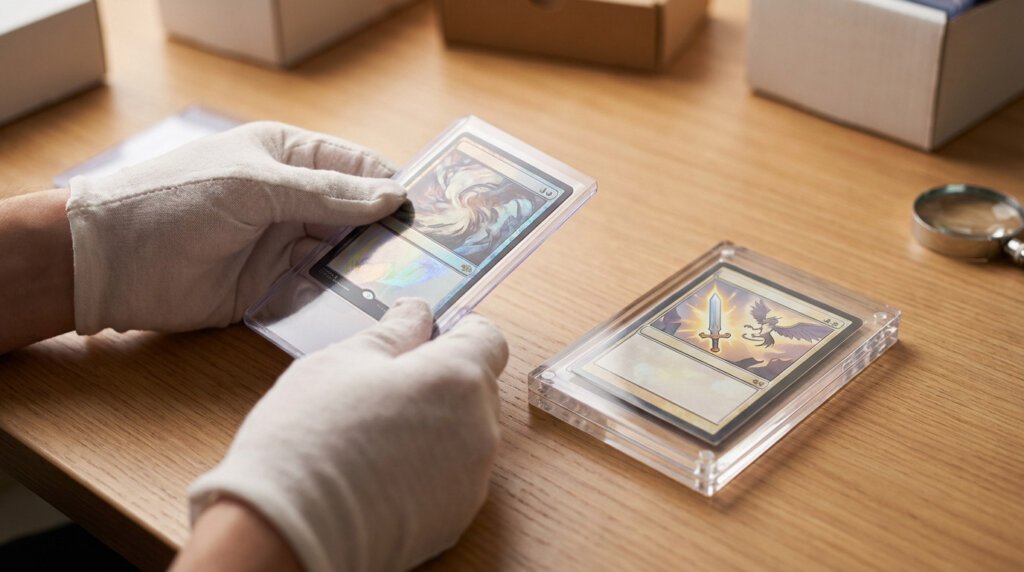
For sealed Pokémon products, look for intact factory wrapping, clean seals, and packaging that has not been unusually damaged or altered. Avoid products that have been opened, retaped, or presented as sealed without a clear explanation. For singles, ask to inspect the front and back under good light. Check corners, edges, surface scratches, dents, whitening, and centering before accepting a price based on near-mint condition.
For graded cards, compare the card inside the slab with the listing photos and verify the label information through the grader’s own tools when available. Do not assume a slab is valuable simply because it has a high number on the label. Card demand, population, set, language, and eye appeal still affect what collectors will pay.
Turn a card-shop visit into a better local Pokémon TCG experience
The strongest reason to shop locally is often the community around the counter. Many game stores host casual play, Pokémon League sessions, prereleases, tournaments, and trade nights. These events can help beginners learn the game, give parents a structured activity to consider, and let competitive players test decks before a larger event.
Check the calendar before visiting and confirm whether registration is required, whether there is an entry fee, and whether players need to bring a legal deck. If you are trading, bring cards in a binder, keep valuable cards protected, and agree on condition before discussing value. A shop with clear trade rules and staff willing to mediate is generally a safer place to make your first local trade.
Finally, keep one backup option. Save a nearby specialist shop for singles and collector items, a local game store for events and advice, and a retailer with pickup for last-minute sealed products or accessories. That small local network gives you a faster, safer way to buy Pokémon cards than relying on one search result or one unpredictable restock.